


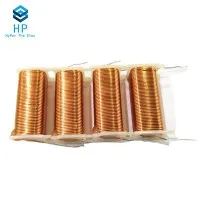

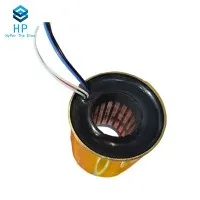

Hey there! As a supplier of Trap Coils, I'm super stoked to chat about all the cool applications these little wonders have. Trap Coils are pretty versatile components, and they play a crucial role in a bunch of different industries and technologies. So, let's dive right in and explore where you can find these coils in action.
Radio Frequency (RF) Circuits
One of the most common applications of Trap Coils is in RF circuits. In the world of radio communication, these coils are used to block or "trap" unwanted frequencies while allowing the desired ones to pass through. This is essential for maintaining clear and reliable signals.
For example, in a radio receiver, a Trap Coil can be used to prevent interference from nearby radio stations that operate on neighboring frequencies. By tuning the coil to the specific frequency of the interfering signal, it can create a high impedance at that frequency, effectively blocking it from reaching the receiver circuitry. This helps in improving the signal-to-noise ratio and overall performance of the radio.
Similarly, in a radio transmitter, Trap Coils can be used to filter out harmonics and other unwanted frequencies generated by the amplifier stages. This ensures that the transmitted signal is clean and within the allocated frequency band, which is important for regulatory compliance and to prevent interference with other radio services.
Telecommunications
In the telecommunications industry, Trap Coils are used in various applications, including telephone lines and broadband networks. In telephone systems, these coils are used to separate the voice frequencies from the higher-frequency data signals that are used for services like DSL (Digital Subscriber Line).
By using a Trap Coil, the voice frequencies can be directed to the telephone handset, while the data signals are sent to the modem for internet access. This allows for simultaneous use of voice and data services over the same telephone line without interference.
In broadband networks, Trap Coils can also be used to filter out unwanted frequencies and noise, which can improve the quality and speed of the data transmission. They help in maintaining a stable and reliable connection, especially in areas with high levels of electromagnetic interference.
Power Electronics
Trap Coils are also widely used in power electronics applications. In power supplies, for example, these coils can be used to filter out high-frequency noise and ripple from the DC output. This helps in providing a clean and stable power supply to the electronic devices, which is essential for their proper operation.
In addition, Trap Coils can be used in motor control circuits to reduce electromagnetic interference (EMI) generated by the motors. By placing a Trap Coil in series with the motor, it can help in suppressing the high-frequency currents and voltages that are produced during the operation of the motor. This not only reduces the EMI but also improves the efficiency and reliability of the motor control system.
Medical Equipment
In the medical field, Trap Coils are used in a variety of equipment, including MRI (Magnetic Resonance Imaging) scanners and electrocardiogram (ECG) machines. In MRI scanners, these coils are used to generate and detect the magnetic fields that are used to create the images of the body.
By using a properly designed Trap Coil, it is possible to optimize the magnetic field distribution and minimize the interference from external sources. This helps in improving the quality of the MRI images and reducing the scanning time.


In ECG machines, Trap Coils can be used to filter out the electrical noise and interference that can be picked up by the electrodes. This ensures that the ECG signals are accurate and reliable, which is crucial for the diagnosis of heart conditions.
Automotive Industry
The automotive industry also makes use of Trap Coils in various applications. In modern cars, there are a large number of electronic systems, including the engine control unit (ECU), the anti-lock braking system (ABS), and the entertainment system. These systems generate and are susceptible to electromagnetic interference, which can affect their performance.
Trap Coils can be used in the wiring harnesses of these systems to filter out the unwanted frequencies and reduce the EMI. This helps in ensuring the proper operation of the electronic systems and improving the reliability and safety of the vehicle.
Comparison with Other Coils
It's worth mentioning how Trap Coils compare to other types of coils, like Oscillating Coils and Antenna Coils. While Oscillating Coils are designed to create an oscillating electrical current, often used in circuits that generate radio waves, Trap Coils are focused on filtering and blocking unwanted frequencies.
Antenna Coils, on the other hand, are used to receive and transmit electromagnetic signals. They are optimized for efficient coupling with the electromagnetic field, whereas Trap Coils are more about controlling the flow of electrical current at specific frequencies.
Conclusion
As you can see, Trap Coils have a wide range of applications across various industries. From improving the performance of radio and telecommunications systems to ensuring the reliability of power electronics and medical equipment, these coils are an essential component in many electronic devices.
If you're in the market for high-quality Trap Coils, look no further. We're a leading supplier of Trap Coils, and we offer a wide range of products to meet your specific needs. Whether you're working on a small DIY project or a large-scale industrial application, we've got the right coil for you.
Contact us today to discuss your requirements and start a procurement conversation. We're here to provide you with the best solutions and support to ensure your projects are a success.
References
- "Electronic Circuits and Devices" by Robert L. Boylestad and Louis Nashelsky
- "RF Circuit Design" by Chris Bowick
- "Power Electronics: Converters, Applications, and Design" by Ned Mohan, Tore M. Undeland, and William P. Robbins