


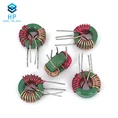


Hey there! As a supplier of Variable Reactors, I'm super stoked to dive into the design specifications of these nifty devices. Variable reactors are pretty cool because they can adjust their reactance, which is super useful in a bunch of electrical applications. Let's break down what goes into designing a top - notch Variable Reactor.
Core Material
The core is like the heart of a Variable Reactor. We've got a few options for core materials, and each has its own pros and cons. One of the most common materials is silicon steel. It's great because it has low core losses, which means less energy is wasted as heat. When the reactor is running, you don't want it to get too hot, right? Silicon steel also has good magnetic properties, allowing it to efficiently store and release magnetic energy.
Another option is ferrite. Ferrite cores are often used in high - frequency applications. They have high resistivity, which helps reduce eddy current losses. Eddy currents are those pesky currents that can form in the core and cause energy loss. So, if you're dealing with high - frequency signals, ferrite might be the way to go.
Coil Design
The coil is where the magic happens in terms of creating the reactance. The number of turns in the coil is a crucial factor. More turns generally mean higher reactance. But we can't just go adding turns willy - nilly. We also have to consider the wire size. A thicker wire can handle more current, but it might take up more space.
The way the coil is wound also matters. There are different winding techniques, like layer winding and pancake winding. Layer winding is when the wire is wound in layers on the core. It's a simple and effective way to build a coil. Pancake winding, on the other hand, spreads the turns out in a flat, pancake - like shape. This can be useful for reducing the capacitance between turns, which is important in some applications.
Reactance Range
One of the key features of a Variable Reactor is its ability to change its reactance. The design has to take into account the desired reactance range. For example, in some power factor correction applications, we might need a reactor that can vary its reactance from a relatively low value to a high value. This allows us to fine - tune the power factor of the electrical system.
The way we achieve this variable reactance can vary. One common method is by using a magnetic field to control the core's magnetic properties. By changing the strength of the magnetic field, we can change the reluctance of the core, which in turn changes the reactance of the coil.
Cooling System
As I mentioned earlier, heat is the enemy of a reactor. So, we need a good cooling system. There are a few different types of cooling methods. Air cooling is the simplest and most common. We can use fans to blow air over the reactor to dissipate the heat. It's cost - effective and works well for smaller reactors.
For larger reactors or those in high - power applications, we might use liquid cooling. This involves circulating a coolant, like water or oil, around the reactor. Liquid cooling is more efficient at removing heat, but it's also more complex and expensive.
Insulation
Insulation is super important to prevent electrical breakdown. The insulation material has to be able to withstand the voltage and temperature conditions of the reactor. We often use materials like epoxy resin or mica for insulation. These materials have good electrical and thermal properties.
The thickness of the insulation also matters. If it's too thin, there's a risk of electrical breakdown. But if it's too thick, it can add to the size and cost of the reactor. So, we have to find the right balance.
Connection and Termination
The way the reactor is connected to the electrical system is crucial. We need to make sure the connections are secure and have low resistance. This helps to minimize power losses.
The termination of the coil also needs to be designed properly. We use different types of terminals, like lugs or bus bars, depending on the application. The terminals have to be able to handle the current and voltage of the system.
Applications and Compatibility
Variable Reactors are used in a wide range of applications. For example, in power factor correction, they help to improve the efficiency of electrical systems by reducing reactive power. They're also used in harmonic filtering to reduce the amount of harmonics in the electrical system.
When designing a Variable Reactor, we have to consider the compatibility with the existing electrical system. The reactor has to be able to work with the voltage, current, and frequency of the system.
Now, let's talk about some related types of reactors. If you're interested in other types of reactors, you can check out these links: Series Resonant Reactor, Saturated Reactor, and Parallel Resonant Reactor.


If you're in the market for a Variable Reactor, we're here to help. Our reactors are designed with the highest quality materials and the latest technology. We can customize the design to meet your specific needs. Whether you need a small reactor for a home application or a large one for an industrial setting, we've got you covered. So, if you're interested in purchasing a Variable Reactor, don't hesitate to reach out and start a conversation about your requirements.
References
- Electrical Engineering Handbook, various authors
- Power System Analysis textbooks