




In the world of electronics, coil inductors play a pivotal role. As a dedicated supplier of Coil Inductors, I've witnessed firsthand the crucial significance of these components in various electronic applications. But what exactly is the core material of a coil inductor, and how does it impact the performance of these essential devices? Let's embark on a detailed exploration.
Understanding the Basics of Coil Inductors
Before delving into the core materials, it's essential to understand what a coil inductor is. A coil inductor, as the name suggests, consists of a coil of wire. When an electric current flows through this coil, it generates a magnetic field. This magnetic field stores energy in the form of magnetic flux. The ability of an inductor to store this energy is measured by its inductance, which is typically expressed in henries (H).
Coil inductors are used in a wide range of applications, from power supplies and filters to radio frequency (RF) circuits. Their performance can significantly affect the overall functionality and efficiency of the electronic systems they are part of. For more information about Coil Inductors, you can visit Coil Inductor.
Key Factors Influenced by Core Materials
The core material of a coil inductor has a profound impact on several key characteristics of the inductor:


- Inductance: The core material can increase or decrease the inductance of the coil. A core with high magnetic permeability can enhance the magnetic field generated by the coil, thereby increasing the inductance.
- Q - Factor: The Q - factor, or quality factor, is a measure of the efficiency of an inductor. It represents the ratio of the energy stored in the inductor to the energy dissipated as heat. The core material can affect the Q - factor by influencing the losses in the inductor.
- Saturation Current: This is the maximum current that an inductor can handle before its inductance starts to decrease significantly. The core material's magnetic properties determine the saturation current of the inductor.
- Frequency Response: Different core materials have different frequency responses. Some materials are better suited for low - frequency applications, while others are more appropriate for high - frequency operations.
Common Core Materials for Coil Inductors
Air Core
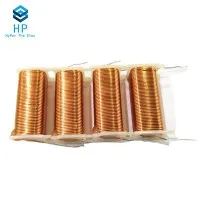
Air core inductors have a simple design where the coil is wound without any magnetic core. The absence of a magnetic core means that the magnetic field is only generated by the current flowing through the coil.
- Advantages: Air core inductors have low losses at high frequencies, making them suitable for RF applications. They also have a linear inductance value with respect to the current, which means that the inductance does not change significantly with the current level.
- Disadvantages: The inductance of air core inductors is relatively low compared to inductors with magnetic cores. This is because air has a low magnetic permeability. As a result, air core inductors often require more turns of wire to achieve a desired inductance value, which can increase the size and cost of the inductor.
Iron Core
Iron is a ferromagnetic material with high magnetic permeability. Iron core inductors are widely used in power applications.
- Advantages: Iron cores can significantly increase the inductance of the coil, allowing for the design of compact inductors with high inductance values. They are also suitable for low - frequency applications, such as power supplies, due to their ability to handle high currents.
- Disadvantages: Iron cores can suffer from high core losses, especially at high frequencies. These losses are mainly due to hysteresis and eddy currents. Hysteresis losses occur because the magnetic domains in the iron core need to be realigned with the changing magnetic field, which dissipates energy as heat. Eddy currents are induced in the iron core by the changing magnetic field, and these currents also cause power losses.
Ferrite Core
Ferrite is a ceramic material composed of iron oxide and other metal oxides. It has unique magnetic properties that make it a popular choice for inductor cores.
- Advantages: Ferrite cores have low core losses at high frequencies, making them ideal for RF and high - frequency power applications. They also have a high resistivity, which helps to reduce eddy current losses. Additionally, ferrite cores can be manufactured in various shapes and sizes, providing flexibility in inductor design.
- Disadvantages: Ferrite cores have a relatively low saturation current compared to iron cores. This means that they may not be suitable for applications that require high - current handling capabilities.
Powdered Iron Core
Powdered iron cores are made by compressing iron powder particles together. The particles are insulated from each other to reduce eddy current losses.
- Advantages: Powdered iron cores offer a good balance between high inductance and low core losses. They have a relatively high saturation current, making them suitable for power applications. They also have a more linear inductance - current characteristic compared to ferrite cores.
- Disadvantages: The manufacturing process of powdered iron cores is more complex and expensive compared to some other core materials.
Application - Specific Core Material Selection
The choice of core material for a coil inductor depends on the specific application requirements.
Power Supplies
In power supplies, such as BUCK Inductor applications, iron or powdered iron cores are often preferred. These cores can handle high currents and provide high inductance values, which are essential for efficient power conversion. The ability to store and release energy in the magnetic field is crucial for regulating the output voltage in a power supply.
Radio Frequency (RF) Circuits
For RF circuits, air core or ferrite core inductors are commonly used. Air core inductors are suitable for applications where low losses and high - frequency performance are critical, such as in RF filters. Ferrite core inductors are also popular in RF applications due to their low core losses at high frequencies and their ability to provide a reasonable inductance value in a compact size.
Toroidal Inductors
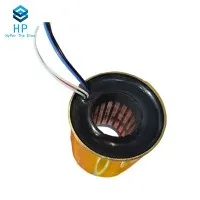
Toroidal Inductors are a special type of inductor where the coil is wound around a toroidal (doughnut - shaped) core. Toroidal cores can be made from various materials, including ferrite and powdered iron. The toroidal shape offers several advantages, such as low electromagnetic interference (EMI) and high inductance per turn. The choice of core material for toroidal inductors depends on the specific application, similar to other types of inductors.
Conclusion
The core material of a coil inductor is a critical factor that determines the performance and suitability of the inductor for different applications. As a Coil Inductor supplier, I understand the importance of selecting the right core material to meet the specific needs of our customers. Whether it's an air core inductor for high - frequency RF applications or an iron core inductor for power supplies, each core material has its unique advantages and limitations.
If you are in the market for high - quality coil inductors and need expert advice on core material selection, we are here to help. Our team of experienced engineers can work with you to understand your requirements and provide the most suitable inductor solutions. Contact us to start a procurement discussion and take your electronic designs to the next level.
References
- Grover, F. W. (1946). Inductance Calculations: Working Formulas and Tables. Dover Publications.
- Terman, F. E. (1955). Radio Engineers' Handbook. McGraw - Hill.
- Chen, C. P. (2004). Power Electronics: Converters, Applications, and Design. John Wiley & Sons.