


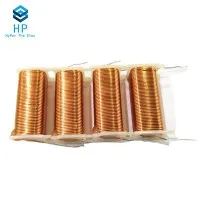

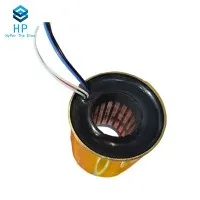

Hey there! As a supplier of smoothing reactors, I often get asked about the difference between a smoothing reactor and a normal reactor. So, I thought I'd take a few minutes to break it down for you in a way that's easy to understand.
Let's start with the basics. A reactor, in general, is an electrical component that stores energy in a magnetic field when an electric current flows through it. Reactors are used in a wide range of electrical systems for various purposes, such as limiting current, improving power factor, and filtering out unwanted electrical noise.
Normal Reactors
Normal reactors come in different types, each designed for a specific function.
One common type is the Current Limiting Reactor. As the name suggests, its main job is to limit the current in an electrical circuit. In a power system, short - circuits can cause extremely high currents that can damage equipment. A current - limiting reactor helps to reduce these high currents to a manageable level, protecting the electrical infrastructure.
Another type is the Power Factor Compensation Reactor. In an AC electrical system, the power factor is a measure of how effectively electrical power is being used. A low power factor means that a significant amount of power is being wasted. Power factor compensation reactors are used to improve the power factor by counteracting the effects of inductive loads, such as motors and transformers.
There's also the Balancing Reactor. This type of reactor is used in multi - phase electrical systems to balance the current between different phases. In a three - phase system, for example, if the loads on each phase are not equal, it can lead to problems like overheating and reduced efficiency. A balancing reactor helps to ensure that the current is evenly distributed across all phases.


Smoothing Reactors
Now, let's talk about smoothing reactors. A smoothing reactor is a special type of reactor that is mainly used in DC circuits, especially in high - power applications like HVDC (High - Voltage Direct Current) transmission systems, rectifier circuits, and some types of industrial power supplies.
One of the key functions of a smoothing reactor is to reduce the ripple in the DC output. When an AC voltage is converted to DC using a rectifier, the output is not a pure DC but has some fluctuations, or ripples, in it. These ripples can cause problems in sensitive electrical equipment, such as interference in communication systems or overheating in power devices. A smoothing reactor acts as a filter, smoothing out these ripples and providing a more stable DC output.
In HVDC transmission systems, smoothing reactors play a crucial role. They help to limit the rate of change of current during faults, which is important for the stability and reliability of the entire system. They also reduce the electromagnetic interference (EMI) generated by the DC system, which can affect nearby communication lines and other electrical equipment.
Physical Differences
Physically, smoothing reactors and normal reactors can have some differences. Smoothing reactors are often designed to handle high - current DC, so they need to be built with materials and structures that can withstand the high - energy magnetic fields associated with DC currents. They usually have a large core and heavy - duty windings to handle the high power levels.
Normal reactors, on the other hand, can be designed for different voltage and current levels depending on their specific application. For example, a current - limiting reactor used in a low - voltage distribution system may be much smaller in size compared to a smoothing reactor used in an HVDC system.
Design and Construction Differences
The design and construction of smoothing reactors are focused on achieving a high degree of inductance stability and low resistance. Since they are used in DC circuits, they need to have a linear inductance characteristic over a wide range of currents. This requires careful selection of core materials and winding techniques.
Normal reactors, depending on their type, may have different design priorities. For example, a power factor compensation reactor may be designed to have a specific inductance value to match the requirements of the load for power factor correction. A current - limiting reactor may be designed to have a high impedance at the fault current frequency.
Performance Characteristics
In terms of performance, smoothing reactors are optimized for DC applications. They are designed to have a low AC impedance to minimize the power loss due to AC components in the DC circuit. They also need to have a high saturation current to ensure that they can operate without significant degradation in performance even under high - current conditions.
Normal reactors, as mentioned earlier, are designed for different AC - related functions. A current - limiting reactor, for example, is optimized to have a high impedance at the fault current frequency to effectively limit the current. A power factor compensation reactor is designed to resonate at a specific frequency to improve the power factor.
Applications
The applications of smoothing reactors and normal reactors also differ significantly. Smoothing reactors are mainly used in DC - based systems, as I mentioned before. They are essential in HVDC transmission, which is becoming increasingly important for long - distance power transmission and interconnecting different power grids. They are also used in large - scale industrial processes where a stable DC power supply is required, such as in aluminum smelting plants and some types of electrochemical processes.
Normal reactors, on the other hand, are used in a wide range of AC applications. Current - limiting reactors are used in power generation, transmission, and distribution systems to protect equipment from short - circuit currents. Power factor compensation reactors are used in industrial and commercial buildings to improve energy efficiency. Balancing reactors are used in multi - phase electrical systems to ensure proper operation.
Cost Considerations
Cost is another factor to consider. Smoothing reactors, especially those used in high - power applications like HVDC systems, can be quite expensive. This is because of the high - quality materials and advanced manufacturing processes required to meet the strict performance requirements.
Normal reactors can vary widely in cost depending on their type and application. A small current - limiting reactor used in a low - voltage distribution system may be relatively inexpensive, while a large - scale power factor compensation reactor for an industrial plant can be more costly.
Conclusion
So, in summary, the main differences between a smoothing reactor and a normal reactor lie in their functions, applications, physical design, and performance characteristics. Normal reactors are used in a variety of AC applications, such as current limiting, power factor compensation, and phase balancing. Smoothing reactors, on the other hand, are specialized for DC applications, mainly for reducing ripple and ensuring the stability of high - power DC systems.
If you're in the market for a smoothing reactor or any other type of reactor, I'd love to help. Whether you need a reactor for a new project or to replace an existing one, I can provide you with high - quality products that meet your specific requirements. Just reach out to me, and we can start a discussion about your needs.
References
- "High - Voltage Direct Current Transmission" by J. Arrillaga, N. R. Watson, and F. J. Polani
- "Power System Analysis" by John J. Grainger and William D. Stevenson Jr.
- "Electrical Engineering Handbook" edited by Richard C. Dorf