


Hey there! As a supplier of AC solenoid coils, I've been getting a lot of questions lately about the dynamic characteristics of these coils. So, I thought I'd sit down and write a blog post to share some insights on this topic.
Let's start with the basics. An AC solenoid coil is an electromagnetic device that uses alternating current (AC) to generate a magnetic field. When an AC voltage is applied to the coil, it creates a magnetic field that varies in strength and direction with the frequency of the current. This magnetic field then interacts with a ferromagnetic core or plunger, causing it to move.
One of the key dynamic characteristics of an AC solenoid coil is its inductance. Inductance is a property of the coil that resists changes in the current flowing through it. When an AC voltage is applied to the coil, the inductance causes the current to lag behind the voltage. This phase difference between the voltage and current is known as the power factor. A low power factor means that the coil is less efficient at converting electrical energy into magnetic energy.


Another important dynamic characteristic is the impedance of the coil. Impedance is a measure of the total opposition to the flow of AC current in the coil. It includes both the resistance of the wire and the inductive reactance, which is a function of the frequency of the AC signal and the inductance of the coil. The impedance of an AC solenoid coil increases with frequency, which means that the coil will draw less current at higher frequencies.
The magnetic field generated by an AC solenoid coil also has some dynamic characteristics. The strength of the magnetic field is proportional to the current flowing through the coil and the number of turns in the coil. However, because the current is alternating, the magnetic field also alternates in strength and direction. This alternating magnetic field can cause the ferromagnetic core or plunger to vibrate or chatter, which can be a problem in some applications.
To reduce the vibration and chatter, many AC solenoid coils are designed with a shading coil. A shading coil is a short-circuited coil that is placed around a portion of the core. The shading coil creates a secondary magnetic field that is out of phase with the main magnetic field, which helps to smooth out the magnetic force and reduce the vibration.
The response time of an AC solenoid coil is another important dynamic characteristic. The response time is the time it takes for the coil to reach its maximum magnetic field strength after the voltage is applied. This is determined by the inductance of the coil and the resistance of the wire. A coil with a high inductance will have a longer response time, while a coil with a low resistance will have a shorter response time.
In addition to these basic dynamic characteristics, there are also some other factors that can affect the performance of an AC solenoid coil. For example, the temperature of the coil can affect its resistance and inductance, which can in turn affect the magnetic field strength and the response time. The frequency of the AC signal can also have an impact on the performance of the coil, especially if the frequency is close to the resonant frequency of the coil.
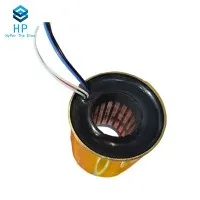
Now, let's talk about some of the different types of AC solenoid coils that we offer as a supplier. One of our popular products is the Solenoid Valve Coil. These coils are used to control the flow of fluids in a variety of applications, such as in plumbing, HVAC, and industrial automation. Solenoid valve coils are designed to be highly reliable and efficient, and they come in a range of sizes and voltages to suit different applications.
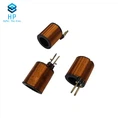
We also offer Hollow Coils. These coils are used in a variety of applications where a magnetic field is needed without a ferromagnetic core. Hollow coils are often used in sensors, antennas, and other electronic devices. They are lightweight and have a low inductance, which makes them suitable for high-frequency applications.
Another type of coil we supply is the DC Solenoid Coil. While this blog is focused on AC solenoid coils, DC solenoid coils have their own unique characteristics. DC solenoid coils use direct current (DC) to generate a magnetic field, and they are often used in applications where a constant magnetic force is required, such as in door locks, relays, and actuators.
So, there you have it! A brief overview of the dynamic characteristics of AC solenoid coils. If you're in the market for AC solenoid coils, or any of the other types of coils we offer, I encourage you to get in touch with us. We have a team of experts who can help you select the right coil for your application and provide you with all the technical support you need. Whether you're a small business or a large industrial manufacturer, we can work with you to meet your needs. So, don't hesitate to reach out and start a conversation about your coil requirements.
References
- Grover, F. W. (1946). Inductance Calculations: Working Formulas and Tables. Dover Publications.
- Hayt, W. H., & Kemmerly, J. E. (2001). Engineering Circuit Analysis. McGraw-Hill.