


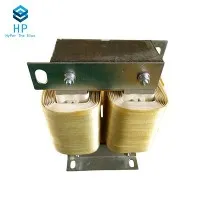

Temperature is a critical environmental factor that can significantly influence the performance of various electronic components, and oscillating coils are no exception. As a leading supplier of Oscillating Coil, I have witnessed firsthand the profound effects of temperature on these coils. In this blog, I will delve into the scientific principles behind the temperature effects on oscillating coils, explore the practical implications, and provide insights for our customers to optimize their use of these components.
Scientific Principles of Temperature Effects on Oscillating Coils
To understand the impact of temperature on oscillating coils, we first need to grasp the fundamental properties of these coils. An oscillating coil is essentially an inductor, which stores energy in a magnetic field when an electric current passes through it. The inductance of a coil is a measure of its ability to oppose changes in current and is determined by factors such as the number of turns, the cross - sectional area, and the permeability of the core material.
1. Resistance Changes
One of the most direct effects of temperature on an oscillating coil is the change in the resistance of the wire used to wind the coil. According to the formula (R = R_0(1+\alpha\Delta T)), where (R) is the resistance at temperature (T), (R_0) is the resistance at a reference temperature, (\alpha) is the temperature coefficient of resistance, and (\Delta T) is the change in temperature. Most metals, which are commonly used in coil windings, have a positive temperature coefficient of resistance. This means that as the temperature increases, the resistance of the coil also increases.
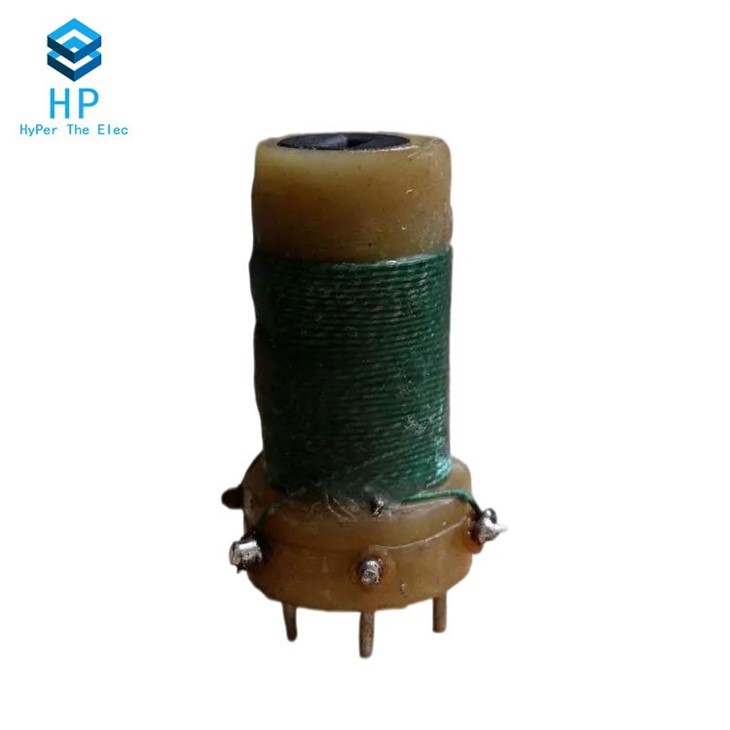

An increase in resistance leads to a higher power dissipation in the coil, which can be calculated using (P = I^{2}R), where (P) is the power, (I) is the current, and (R) is the resistance. Higher power dissipation can cause overheating of the coil, which may further degrade its performance and even lead to premature failure.
2. Inductance Changes
Temperature can also affect the inductance of an oscillating coil. The inductance of a coil is related to the magnetic properties of the core material. For example, in a coil with a ferromagnetic core, the permeability of the core material changes with temperature. As the temperature rises, the magnetic domains in the ferromagnetic material become more disordered, which reduces the permeability. Since inductance (L=\mu N^{2}A/l) (where (\mu) is the permeability, (N) is the number of turns, (A) is the cross - sectional area, and (l) is the length of the coil), a decrease in permeability results in a decrease in inductance.
This change in inductance can have a significant impact on the resonant frequency of the oscillating circuit. The resonant frequency (f_0=\frac{1}{2\pi\sqrt{LC}}), where (L) is the inductance and (C) is the capacitance in the circuit. A decrease in inductance will cause an increase in the resonant frequency, which can disrupt the normal operation of the circuit.
3. Mechanical Effects
Temperature changes can also cause mechanical stress in the coil. Different materials expand and contract at different rates when the temperature changes. For example, the wire used in the coil and the core material may have different coefficients of thermal expansion. This can lead to mechanical stress, which may cause the coil to deform or even break. In extreme cases, the mechanical stress can cause the turns of the coil to short - circuit, resulting in a complete failure of the coil.
Practical Implications of Temperature Effects
The temperature - induced changes in resistance, inductance, and mechanical properties of oscillating coils can have several practical implications in real - world applications.
1. Frequency Stability
In applications such as radio frequency (RF) circuits, frequency stability is crucial. A change in the resonant frequency of an oscillating coil due to temperature variations can cause the circuit to operate at an incorrect frequency. This can lead to problems such as poor signal reception, interference, and reduced communication range. For example, in a radio receiver, a shift in the resonant frequency of the tuning coil can cause the receiver to be unable to tune to the desired station accurately.
2. Power Efficiency
As mentioned earlier, an increase in resistance due to temperature rise leads to higher power dissipation. This not only reduces the power efficiency of the circuit but also generates more heat, which can further exacerbate the temperature - related problems. In battery - powered devices, such as mobile phones and portable radios, the increased power consumption can significantly reduce the battery life.
3. Reliability
The mechanical stress caused by temperature changes can reduce the reliability of the oscillating coil. Over time, repeated temperature cycles can cause fatigue in the coil, leading to cracks and breaks in the wire. This can result in intermittent failures or complete breakdown of the circuit. In critical applications, such as aerospace and medical devices, the failure of an oscillating coil can have serious consequences.
Strategies to Mitigate Temperature Effects
As a supplier of Oscillating Coil, we understand the importance of minimizing the temperature effects on our products. Here are some strategies that we recommend to our customers:
1. Thermal Management
Proper thermal management is essential to control the temperature of the oscillating coil. This can include using heat sinks, fans, or other cooling devices to dissipate the heat generated by the coil. In addition, the layout of the circuit board can be designed to ensure good ventilation and heat transfer. For example, placing the coil away from other heat - generating components can help reduce the temperature rise.
2. Material Selection
Choosing the right materials for the coil and the core can also help mitigate the temperature effects. For example, using a wire with a low temperature coefficient of resistance can reduce the change in resistance with temperature. Similarly, selecting a core material with a stable permeability over a wide temperature range can help maintain the inductance of the coil.
3. Design Optimization
Optimizing the design of the oscillating coil can also improve its temperature performance. For example, increasing the number of turns or using a larger cross - sectional area of the wire can reduce the resistance and power dissipation. In addition, using a more robust mechanical design can help withstand the mechanical stress caused by temperature changes.
Conclusion
Temperature has a significant impact on the performance of oscillating coils. The changes in resistance, inductance, and mechanical properties due to temperature variations can affect the frequency stability, power efficiency, and reliability of the circuits in which these coils are used. As a supplier of Oscillating Coil, we are committed to providing high - quality products that can withstand the challenges posed by temperature. By understanding the scientific principles behind the temperature effects and implementing appropriate mitigation strategies, our customers can ensure the optimal performance of their electronic devices.
If you are interested in purchasing our Oscillating Coil, Antenna Coil, or Resonant Coil, please feel free to contact us for further discussion and negotiation. We look forward to serving you and helping you find the best solutions for your applications.
References
- Boylestad, R. L., & Nashelsky, L. (2009). Electronic Devices and Circuit Theory. Pearson Prentice Hall.
- Hayt, W. H., & Kemmerly, J. E. (2007). Engineering Circuit Analysis. McGraw - Hill.
- Sedra, A. S., & Smith, K. C. (2010). Microelectronic Circuits. Oxford University Press.