




Hey there! As a supplier of Trap Coils, I've been getting a lot of questions lately about how these nifty little devices interact with electrostatic fields. So, I thought I'd take a moment to break it down for you in a way that's easy to understand.
First off, let's talk about what a Trap Coil is. A Trap Coil, also known as a tuned circuit or resonant circuit, is a type of inductor that's designed to block or "trap" certain frequencies while allowing others to pass through. It's commonly used in radio frequency (RF) circuits to filter out unwanted signals and improve the overall performance of the system.


Now, let's get into the nitty-gritty of how Trap Coils interact with electrostatic fields. Electrostatic fields are created by stationary electric charges, and they can have a significant impact on the performance of electronic devices. When a Trap Coil is placed in an electrostatic field, it can experience a phenomenon called electrostatic coupling. This occurs when the electric field induces a voltage in the coil, which can cause it to resonate at a specific frequency.
The resonance frequency of a Trap Coil is determined by its inductance and capacitance. When the frequency of the electrostatic field matches the resonance frequency of the coil, the coil will absorb the energy from the field and start to oscillate. This can cause the coil to act as a filter, blocking out unwanted frequencies and allowing only the desired frequencies to pass through.
One of the key benefits of using a Trap Coil in an electrostatic field is its ability to reduce electromagnetic interference (EMI). EMI can cause a variety of problems in electronic devices, including signal distortion, noise, and even complete failure. By using a Trap Coil to filter out unwanted frequencies, you can significantly reduce the impact of EMI on your system and improve its overall performance.
Another important factor to consider when using a Trap Coil in an electrostatic field is its impedance. Impedance is a measure of the opposition to the flow of electric current in a circuit, and it plays a crucial role in determining the performance of a Trap Coil. When the impedance of the coil matches the impedance of the electrostatic field, the coil will be able to absorb the maximum amount of energy from the field and provide the best possible filtering performance.
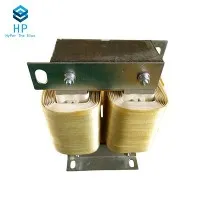
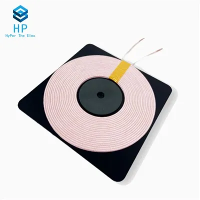
Now, let's take a look at some of the different types of Trap Coils that are available on the market. There are several different types of Trap Coils, each with its own unique characteristics and applications. Some of the most common types of Trap Coils include Choke Coil, Antenna Coil, and Resonant Coil.
Choke Coils are designed to block high-frequency signals while allowing low-frequency signals to pass through. They're commonly used in power supplies and audio circuits to filter out unwanted noise and interference. Antenna Coils, on the other hand, are designed to receive and transmit radio signals. They're commonly used in radio and television receivers, as well as in wireless communication systems. Resonant Coils are designed to resonate at a specific frequency, and they're commonly used in RF circuits to filter out unwanted frequencies and improve the overall performance of the system.
As a Trap Coil supplier, I understand the importance of providing high-quality products that meet the needs of my customers. That's why I offer a wide range of Trap Coils that are designed to meet the specific requirements of different applications. Whether you're looking for a Choke Coil, Antenna Coil, or Resonant Coil, I've got you covered.
In addition to providing high-quality products, I also offer excellent customer service and technical support. If you have any questions or need help selecting the right Trap Coil for your application, don't hesitate to contact me. I'm always happy to help!
So, there you have it! That's a brief overview of how Trap Coils interact with electrostatic fields. I hope this article has been helpful in understanding the principles behind this important technology. If you're interested in learning more about Trap Coils or if you're looking to purchase some for your application, please don't hesitate to contact me. I'd be happy to discuss your needs and help you find the right solution for your project.
References
- Electromagnetic Theory and Applications by Constantine A. Balanis
- RF Circuit Design by Chris Bowick
- Electronic Devices and Circuit Theory by Robert L. Boylestad and Louis Nashelsky