


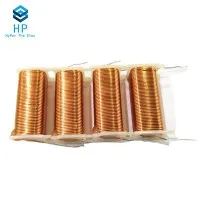

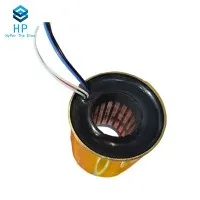

As a supplier of Oscillating Coils, I've witnessed firsthand the pivotal role these components play in various electrical and electronic applications. One question that frequently arises in technical discussions and customer inquiries is: What is the effect of the magnetic core on the oscillation of an oscillating coil? In this blog post, I'll delve into this topic, exploring the science behind it and how it impacts the performance of oscillating coils.
Understanding Oscillating Coils
Before we discuss the influence of magnetic cores, let's briefly understand what an oscillating coil is. An Oscillating Coil is a fundamental component in many electrical circuits, especially those involved in generating and controlling oscillating signals. These coils are designed to store energy in a magnetic field and release it back into the circuit, creating a continuous cycle of energy transfer that results in oscillations.
The basic principle of an oscillating coil is based on Faraday's law of electromagnetic induction. When an electric current flows through the coil, it generates a magnetic field around it. Conversely, when the magnetic field changes, it induces an electromotive force (EMF) in the coil, which can cause a current to flow. This interaction between the electric current and the magnetic field is the foundation of oscillation in these coils.
The Role of Magnetic Cores
A magnetic core is a material with high magnetic permeability that is placed inside the coil. The primary purpose of using a magnetic core is to enhance the magnetic field generated by the coil. By concentrating the magnetic flux, the core increases the inductance of the coil, which is a measure of its ability to store energy in the magnetic field.
The inductance of a coil is given by the formula (L=\frac{\mu N^{2}A}{l}), where (L) is the inductance, (\mu) is the magnetic permeability of the core material, (N) is the number of turns in the coil, (A) is the cross - sectional area of the coil, and (l) is the length of the coil. As we can see from this formula, the inductance is directly proportional to the magnetic permeability of the core material.
Effects on Oscillation Frequency
One of the most significant effects of the magnetic core on the oscillation of an oscillating coil is its impact on the oscillation frequency. The frequency of oscillation in an LC (inductor - capacitor) circuit, which is a common configuration for oscillating coils, is given by the formula (f=\frac{1}{2\pi\sqrt{LC}}), where (f) is the frequency, (L) is the inductance of the coil, and (C) is the capacitance of the capacitor.
Since the inductance (L) is increased by the presence of a magnetic core with high permeability, the oscillation frequency (f) decreases. This means that by choosing a core material with different magnetic properties, we can control the frequency of the oscillating coil. For example, a core with a very high permeability will result in a lower oscillation frequency, while a core with a lower permeability will allow for a higher frequency of oscillation.
Effects on Oscillation Amplitude
The magnetic core also affects the amplitude of the oscillations in an oscillating coil. The amplitude of the oscillations is related to the amount of energy stored in the magnetic field of the coil. As the magnetic core increases the inductance of the coil, it allows more energy to be stored in the magnetic field. This, in turn, can lead to a larger amplitude of oscillations.
However, it's important to note that the relationship between the core and the amplitude is not always straightforward. Other factors, such as the resistance in the circuit and the quality factor ((Q)) of the coil, also play a role. The quality factor is a measure of the efficiency of the coil in storing and transferring energy. A higher (Q) factor generally results in larger amplitudes of oscillation. The magnetic core can affect the (Q) factor by influencing the losses in the coil, such as eddy current losses and hysteresis losses.
Types of Magnetic Cores and Their Effects
There are several types of magnetic cores commonly used in oscillating coils, each with its own unique properties and effects on oscillation.
Ferrite Cores
Ferrite cores are made of ceramic materials with high magnetic permeability and low electrical conductivity. They are widely used in high - frequency applications because they have low eddy current losses. Eddy currents are induced currents that flow within the core material, causing energy losses in the form of heat. Since ferrite cores have low electrical conductivity, the eddy current losses are minimized, allowing for efficient operation at high frequencies.
In terms of oscillation, ferrite cores can significantly increase the inductance of the coil, leading to a decrease in the oscillation frequency. They also tend to have a relatively high (Q) factor, which can result in larger amplitudes of oscillation.
Iron Cores
Iron cores have high magnetic permeability, which makes them suitable for applications where a large inductance is required. However, iron has relatively high electrical conductivity, which means that it is prone to eddy current losses. These losses can reduce the efficiency of the coil and limit its performance at high frequencies.
When used in an oscillating coil, an iron core can cause a significant decrease in the oscillation frequency due to its high inductance. The eddy current losses can also dampen the oscillations, reducing the amplitude. However, for low - frequency applications, iron cores can still be a viable option.
Air Cores
Air cores, as the name suggests, have no magnetic material inside the coil. They have a very low magnetic permeability, which results in a relatively low inductance. Since the inductance is low, the oscillation frequency of an air - core oscillating coil is generally higher compared to coils with magnetic cores.
Air cores have the advantage of having very low losses, as there are no eddy current or hysteresis losses associated with a magnetic material. This makes them suitable for applications where high - frequency and high - efficiency operation are required. However, the low inductance also means that the amplitude of the oscillations may be relatively small compared to coils with magnetic cores.
Practical Applications
The effects of magnetic cores on the oscillation of oscillating coils have numerous practical applications. For example, in radio frequency (RF) circuits, the ability to control the frequency of oscillation is crucial. By using different magnetic cores, we can tune the oscillating coils to different frequencies, allowing for the reception and transmission of specific radio frequencies.
In power electronics, oscillating coils are used in inverters and converters to generate alternating current (AC) from direct current (DC). The magnetic core can be used to optimize the performance of these circuits by adjusting the frequency and amplitude of the oscillations.
Another application is in sensors and detectors. Oscillating coils can be used as sensors to detect changes in the magnetic field or the presence of nearby objects. The magnetic core can enhance the sensitivity of these sensors by increasing the inductance and the amplitude of the oscillations.
Conclusion
In conclusion, the magnetic core plays a crucial role in the oscillation of an oscillating coil. It affects both the frequency and amplitude of the oscillations, allowing for precise control of the coil's performance. By choosing the right magnetic core material, we can optimize the oscillating coil for different applications, whether it's for high - frequency RF circuits, power electronics, or sensor applications.

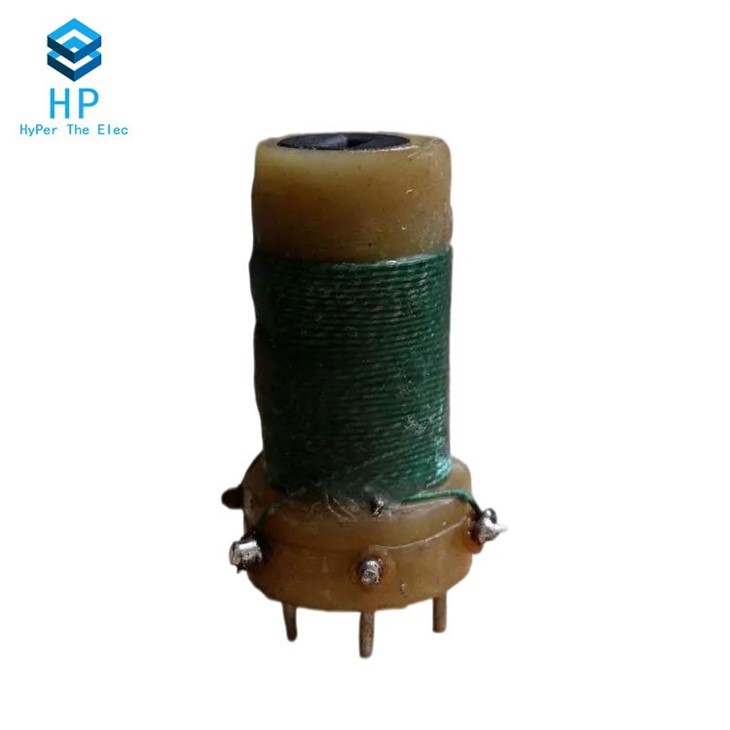
As a supplier of Oscillating Coils, we understand the importance of providing high - quality coils with the right magnetic cores. We offer a wide range of oscillating coils with different core materials and configurations to meet the diverse needs of our customers. If you're interested in learning more about our products or have specific requirements for your application, we encourage you to contact us for a detailed discussion. Our team of experts is ready to assist you in finding the perfect solution for your oscillating coil needs.
References
- Boylestad, R. L., & Nashelsky, L. (2012). Electronic Devices and Circuit Theory. Pearson.
- Hayt, W. H., & Kemmerly, J. E. (2007). Engineering Circuit Analysis. McGraw - Hill.
- Sedra, A. S., & Smith, K. C. (2015). Microelectronic Circuits. Oxford University Press.