




Hey there! As a supplier of Filter Inductors, I often get asked about the frequency range of these nifty components. So, I thought I'd take a moment to break it down for you in a way that's easy to understand.
First off, let's talk about what a Filter Inductor actually does. A Filter Inductor is a key part in many electrical circuits. Its main job is to filter out unwanted frequencies and let the desired ones pass through. It's like a bouncer at a club, only letting in the cool kids (the right frequencies) and keeping out the troublemakers (the unwanted ones).
Now, the frequency range of a Filter Inductor can vary quite a bit depending on its design and intended use. In general, Filter Inductors can work across a pretty wide range of frequencies, from a few hertz (Hz) all the way up to several gigahertz (GHz).
For low - frequency applications, say in power supplies for large electrical equipment or audio systems, Filter Inductors are designed to work in the range of a few Hz to a few kilohertz (kHz). These inductors are usually larger in size because they need to handle higher currents and store more magnetic energy. For example, in a traditional audio amplifier, the Filter Inductor might be used to smooth out the DC power supply. It can filter out any low - frequency noise that could otherwise affect the audio quality.
On the other hand, when we move into the high - frequency realm, like in wireless communication devices or high - speed data transfer systems, Filter Inductors are designed to work in the megahertz (MHz) to gigahertz (GHz) range. These inductors are much smaller in size but need to have very precise characteristics. In a Wi - Fi router, for instance, Filter Inductors are used to filter out any interference that could disrupt the wireless signal. They help ensure that the signal sent and received is clear and free from unwanted noise.


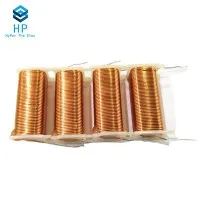
There are also different types of Filter Inductors, and each type has its own typical frequency range. Take the Coil Inductor. Coil inductors are one of the most basic types of inductors. They can be used in a wide range of applications, from low - frequency power filtering to high - frequency signal processing. Their frequency range can span from a few Hz to several hundred MHz, depending on the number of turns, the core material, and the size of the coil.
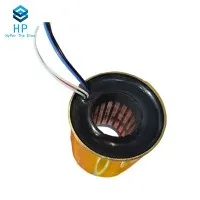
Another important type is the PFC Inductor, which stands for Power Factor Correction Inductor. PFC inductors are mainly used in power supplies to improve the power factor. They typically work in the range of a few kHz to a few hundred kHz. By improving the power factor, these inductors help reduce energy waste and make the power supply more efficient.
The frequency range of a Filter Inductor is also affected by its core material. Different core materials have different magnetic properties, which can influence how the inductor behaves at different frequencies. For example, iron - core inductors are great for low - frequency applications because they can store a large amount of magnetic energy. But they tend to have higher losses at high frequencies. On the other hand, ferrite - core inductors are better suited for high - frequency applications because they have lower losses at those frequencies.
When designing a circuit that uses a Filter Inductor, it's crucial to choose the right inductor with the appropriate frequency range. If you use an inductor with a frequency range that's too narrow, it might not be able to filter out all the unwanted frequencies. And if you use an inductor with a frequency range that's too wide, it might not provide the precise filtering you need.
As a Filter Inductor supplier, we understand the importance of getting the frequency range right. That's why we offer a wide variety of Filter Inductors, each carefully designed to meet different frequency requirements. Whether you're working on a low - frequency power supply project or a high - frequency wireless communication device, we've got the right inductor for you.
We also have a team of experts who can help you select the best inductor for your specific application. They can take into account factors like the type of circuit, the frequency range, the current requirements, and the available space. So, if you're not sure which Filter Inductor is the right one for your project, don't hesitate to reach out to us.
In conclusion, the frequency range of a Filter Inductor is a critical factor in its performance. It can vary widely depending on the type of inductor, the core material, and the intended application. As a supplier, we're committed to providing high - quality Filter Inductors that meet your specific frequency needs. If you're in the market for Filter Inductors for your next project, we'd love to have a chat with you. Contact us today, and let's start a conversation about how we can help you find the perfect Filter Inductor for your needs.
References:
- Electrical Engineering textbooks on circuit theory and passive components
- Industry whitepapers on Filter Inductor design and applications