




In the realm of electrical and electromagnetic engineering, the encapsulated coil plays a crucial and often under - appreciated role. As a supplier of encapsulated coils, understanding their frequency response is essential for both us and our clients. This blog aims to delve deep into what the frequency response of an encapsulated coil is, why it matters, and how it impacts various applications.
Understanding the Basics of an Encapsulated Coil
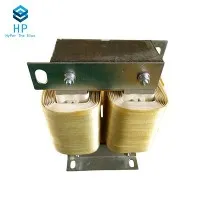
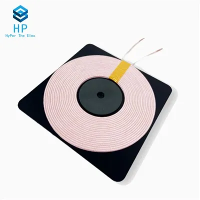
First, let's briefly introduce what an encapsulated coil is. An encapsulated coil is a coil of wire that is enclosed in a protective housing, typically made of materials like resin or plastic. This encapsulation serves multiple purposes. It isolates the coil from external environmental factors such as moisture, dust, and mechanical stress, which can significantly improve its reliability and lifespan. You can learn more about encapsulated coils on our Encapsulated Coil page.
The Concept of Frequency Response
Frequency response refers to the way a system (in this case, an encapsulated coil) behaves when subjected to input signals of different frequencies. It describes how the output of the coil, such as voltage, current, or magnetic field strength, changes in relation to the frequency of the input electrical signal.
An ideal coil would have a linear response, meaning that the output would be directly proportional to the input at all frequencies. However, in reality, the frequency response of an encapsulated coil is more complex. It is influenced by several factors, including the coil's inductance, resistance, and capacitance, as well as the properties of the encapsulation material.


Factors Affecting the Frequency Response of an Encapsulated Coil
Inductance
Inductance is a fundamental property of a coil. It is a measure of the coil's ability to generate an electromotive force (EMF) in response to a changing current. The inductance of a coil is determined by factors such as the number of turns, the cross - sectional area, and the length of the coil.
At low frequencies, the inductive reactance ($X_L = 2\pi fL$, where $f$ is the frequency and $L$ is the inductance) is relatively small. As the frequency increases, the inductive reactance also increases. This means that at higher frequencies, the coil offers more opposition to the flow of alternating current. As a result, the current through the coil decreases, and the magnetic field generated by the coil is affected.
Resistance
The resistance of the coil wire also plays a role in the frequency response. The resistance of a wire is typically constant over a wide range of frequencies. However, at very high frequencies, the skin effect comes into play. The skin effect causes the current to flow mainly near the surface of the wire, increasing the effective resistance of the wire. This can lead to additional power losses in the coil and a change in the frequency response.
Capacitance
There is also capacitance associated with an encapsulated coil. This capacitance can be between the turns of the coil (inter - turn capacitance) or between the coil and the encapsulation material. At low frequencies, the capacitive reactance ($X_C=\frac{1}{2\pi fC}$, where $C$ is the capacitance) is very high, and the capacitance has little effect on the coil's performance. But at high frequencies, the capacitive reactance decreases, and the capacitance can cause resonance in the coil. Resonance occurs when the inductive reactance is equal to the capacitive reactance ($X_L = X_C$), and it can lead to a significant increase in the current and voltage in the coil.
Encapsulation Material
The properties of the encapsulation material can also affect the frequency response. For example, if the encapsulation material has a high dielectric constant, it can increase the inter - turn capacitance of the coil. This can lower the resonant frequency of the coil and change its frequency response characteristics. Additionally, the encapsulation material may have some lossy properties, which can cause additional power losses in the coil, especially at high frequencies.
Applications and the Importance of Frequency Response
The frequency response of an encapsulated coil is of great importance in various applications.
Power Electronics
In power electronics, encapsulated coils are often used in transformers, inductors, and filters. The frequency response of these coils affects the efficiency and performance of the power electronic circuits. For example, in a switching power supply, the inductor's frequency response determines how well it can store and release energy at different switching frequencies. A coil with a poor frequency response may cause increased ripple current, reduced efficiency, and electromagnetic interference (EMI).
Communication Systems
In communication systems, encapsulated coils can be used in antennas, filters, and matching circuits. The frequency response of the coil determines the bandwidth and selectivity of these components. For example, in a radio frequency (RF) filter, the coil's frequency response helps to select the desired frequencies and reject unwanted ones. A well - designed coil with the appropriate frequency response can improve the signal quality and performance of the communication system.
Medical Devices
In medical devices, such as magnetic resonance imaging (MRI) machines and electromagnetic therapy devices, encapsulated coils are used to generate magnetic fields. The frequency response of these coils is crucial for ensuring the accurate and safe operation of the devices. For example, in an MRI machine, the coil's frequency response must be carefully tuned to match the resonant frequency of the hydrogen nuclei in the body to produce high - quality images.
Comparing with Other Types of Coils
It is also interesting to compare the frequency response of encapsulated coils with other types of coils, such as Hollow Coil and AC Solenoid Coil.
Hollow coils have a simple structure without any core material. They typically have lower inductance compared to encapsulated coils of the same size, which results in a different frequency response. Hollow coils are often used in applications where low inductance and high - frequency performance are required, such as in some RF circuits.
AC solenoid coils are designed to operate with alternating current. They are usually optimized for a specific range of frequencies and applications, such as in solenoid valves. The frequency response of AC solenoid coils is tailored to ensure proper operation and reliable actuation of the solenoid at the intended frequency. Compared to encapsulated coils, AC solenoid coils may have different design considerations and frequency - dependent characteristics, depending on their application requirements.
Measuring the Frequency Response of an Encapsulated Coil
To accurately determine the frequency response of an encapsulated coil, several measurement techniques can be used. One common method is to use a network analyzer. A network analyzer can measure the scattering parameters (S - parameters) of the coil, which provide information about the coil's input and output characteristics at different frequencies. By analyzing the S - parameters, we can obtain the frequency response of the coil, including its gain, phase shift, and impedance.
Another method is to use a frequency - response analyzer. This device applies a swept - frequency input signal to the coil and measures the output response. The frequency - response analyzer can then plot the frequency response curve, which shows how the output of the coil varies with frequency.
How We Can Help
As a supplier of encapsulated coils, we understand the importance of the frequency response in different applications. We have a team of experienced engineers who can design and manufacture encapsulated coils with the desired frequency response characteristics. Whether you need a coil for a power electronics application, a communication system, or a medical device, we can work with you to develop a custom - designed solution that meets your specific requirements.
If you are interested in learning more about our encapsulated coils or have a project that requires a coil with a specific frequency response, we encourage you to contact us. We are dedicated to providing high - quality products and excellent customer service. Our technical support team is ready to assist you in selecting the right coil for your application and answering any questions you may have.
In summary, the frequency response of an encapsulated coil is a complex yet crucial aspect that influences its performance in various applications. By understanding the factors that affect the frequency response and using the appropriate measurement techniques, we can ensure that our encapsulated coils meet the highest standards of quality and performance.
References
- Hayt, W. H., & Kemmerly, J. E. (1993). Engineering Circuit Analysis. McGraw - Hill.
- Nilsson, J. W., & Riedel, S. A. (2015). Electric Circuits. Pearson.
- Sedra, A. S., & Smith, K. C. (2015). Microelectronic Circuits. Oxford University Press.