




As a reliable supplier of hollow coils, I've witnessed firsthand the ever - growing demand for these components in various industries. Today, I'd like to take a deep dive into the qualities that make a hollow coil stand out in the market.
Physical Characteristics
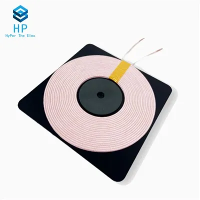
One of the most noticeable qualities of a hollow coil is its physical structure. As the name implies, a hollow coil has an empty core. This design feature offers several advantages. Firstly, it reduces the overall weight of the coil, making it more suitable for applications where weight is a critical factor, such as in aerospace and portable electronics. A lighter coil also means less energy is required to move or operate the equipment, leading to improved energy efficiency.
The shape of the coil is another important aspect. Most hollow coils are wound in a cylindrical shape, which provides a uniform magnetic field distribution around the coil. This uniformity is crucial for applications that rely on precise magnetic field control, like magnetic resonance imaging (MRI) machines and some types of scientific research equipment. The winding density of the coil also plays a role. A higher winding density generally results in a stronger magnetic field for a given current, but it also increases the resistance of the coil. Therefore, designers need to strike a balance between the magnetic field strength and the power consumption based on the specific requirements of the application.
Electrical Performance
The electrical performance of a hollow coil is a key quality determinant. Resistance is one of the fundamental electrical properties of a coil. Resistance in a hollow coil is mainly influenced by the material of the wire used for winding and its cross - sectional area. Copper is a popular choice for coil winding due to its low resistivity, which allows for efficient electrical conduction and reduces power loss in the form of heat.
Inductance is another critical electrical parameter. Inductance measures the ability of a coil to store energy in a magnetic field when an electric current passes through it. The inductance of a hollow coil depends on factors such as the number of turns, the cross - sectional area of the coil, and the length of the coil. A higher inductance value means that the coil can store more energy in the magnetic field, which can be beneficial in applications such as energy storage circuits and transformers.
Capacitance in a hollow coil is also a consideration. When the windings of the coil are close to each other, there is a small amount of capacitance between them. This capacitance can affect the frequency response of the coil, especially at high frequencies. For applications that require high - frequency operation, such as radio frequency (RF) circuits, minimizing the capacitance of the coil is essential to ensure stable performance.
Thermal Properties
Thermal management is a significant quality aspect of a hollow coil. When an electric current passes through the coil, some of the electrical energy is converted into heat due to the resistance of the wire. Excessive heat can cause the wire to expand, which may lead to changes in the coil's electrical properties or even mechanical damage.
The heat dissipation ability of a hollow coil is influenced by its design and the surrounding environment. The hollow core provides a path for air to flow through the coil, which can help in natural convection cooling. In some applications, additional cooling methods such as forced air cooling or liquid cooling may be required to maintain the coil within its safe operating temperature range.
The choice of insulation material for the wire also affects the thermal properties of the coil. Insulation materials with high thermal conductivity can help transfer heat away from the wire more effectively, reducing the risk of overheating.
Mechanical Durability
A high - quality hollow coil needs to be mechanically durable. It should be able to withstand vibrations, shocks, and mechanical stress without significant damage. This is especially important in applications such as automotive and industrial machinery, where the coil may be subjected to harsh operating conditions.
The winding of the coil should be secure to prevent the wire from unwinding or shifting during operation. Some manufacturers use adhesives or encapsulation techniques to hold the windings in place. The end - terminations of the coil also need to be robust. They should be able to withstand repeated bending and connection - disconnection cycles without breaking or losing their electrical conductivity.
Compatibility and Customization
In today's diverse market, compatibility is a must - have quality for a hollow coil. A good supplier should offer coils that are compatible with different types of electrical systems and components. This means providing coils with the appropriate voltage, current, and impedance ratings to ensure seamless integration into various applications.
Customization is also a highly valued quality. Different industries have unique requirements for hollow coils. For example, the medical industry may need coils with extremely high precision and low magnetic interference, while the telecommunications industry may require coils with specific frequency responses. As a supplier, being able to offer customized solutions can provide a competitive edge. We can work closely with customers to understand their specific needs and develop tailor - made hollow coils.


Applications and Related Products
Hollow coils are widely used in various applications. One of the common applications is in solenoid devices. Solenoid valves, for example, use coils to generate a magnetic field that controls the opening and closing of the valve. You can find more information about Solenoid Valve Coil on our website. AC solenoids also rely on coils to operate in alternating current circuits. Check out AC Solenoid Coil for detailed information.
Of course, our main product, the Hollow Coil, is at the heart of many of these applications. Its unique design and properties make it a versatile component in the world of electronics and electromagnetism.
Conclusion and Call to Action
In conclusion, the quality of a hollow coil is determined by a combination of physical, electrical, thermal, and mechanical properties. A high - quality hollow coil should have the right physical structure, excellent electrical performance, good thermal management, mechanical durability, and be compatible with various systems. At our company, we are committed to providing the highest - quality hollow coils that meet the diverse needs of our customers.
If you are interested in purchasing high - quality hollow coils or would like to discuss a customized solution for your specific application, we welcome you to reach out to us. Our team of experts is ready to assist you in finding the perfect coil for your needs.
References
- "Electromagnetic Coils: Principles, Design, and Applications" by John D. Kraus.
- "Handbook of Electrical and Electronics Insulating Materials" edited by A. K. Jonscher.
- Industry standards and guidelines related to solenoid coils and electromagnetic components.