


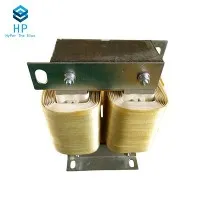



As a supplier of Output Reactors, I am often asked about the working principle of these essential electrical components. In this blog post, I will delve into the details of how Output Reactors function, their applications, and why they are crucial in various electrical systems.
Understanding the Basics of Reactors
Before we dive into the working principle of an Output Reactor, let's first understand what a reactor is. A reactor is an electrical component that stores energy in a magnetic field when an electric current flows through it. It is essentially an inductor, which is a passive two - terminal electrical component that resists changes in electric current. Reactors are used in a wide range of electrical applications, from power distribution systems to industrial machinery.
There are different types of reactors, such as Series Resonant Reactor, Output Reactor, and Saturated Reactor. Each type has its own unique characteristics and applications.
Working Principle of an Output Reactor
An Output Reactor, also known as an output choke, is typically installed between the output of a variable frequency drive (VFD) and the motor. The main function of an Output Reactor is to protect the motor from the harmful effects of high - frequency voltage spikes and current harmonics generated by the VFD.
Inductive Reactance
The working principle of an Output Reactor is based on the concept of inductive reactance. Inductive reactance ($X_L$) is the opposition that an inductor offers to the flow of alternating current (AC). It is calculated using the formula $X_L = 2\pi fL$, where $f$ is the frequency of the AC signal and $L$ is the inductance of the reactor.
When an AC current flows through an Output Reactor, the changing magnetic field around the inductor induces an electromotive force (EMF) that opposes the change in current. This opposition to the change in current helps to smooth out the current waveform and reduce the high - frequency components.


Filtering Harmonics
One of the primary functions of an Output Reactor is to filter out the harmonics generated by the VFD. VFDs use pulse - width modulation (PWM) to control the speed of the motor. This process generates high - frequency voltage spikes and current harmonics, which can cause overheating, insulation damage, and premature failure of the motor.
The Output Reactor acts as a low - pass filter, allowing the fundamental frequency (usually 50 or 60 Hz) to pass through while attenuating the high - frequency harmonics. By reducing the harmonic content in the current, the Output Reactor helps to improve the power quality and extend the lifespan of the motor.
Reducing Voltage Spikes
In addition to filtering harmonics, an Output Reactor also helps to reduce the voltage spikes that occur when the VFD switches the power to the motor. These voltage spikes can be caused by the rapid switching of the semiconductor devices in the VFD. The Output Reactor limits the rate of change of the current, which in turn reduces the magnitude of the voltage spikes.
The inductor in the Output Reactor stores energy in its magnetic field during the rising edge of the current and releases it during the falling edge. This energy storage and release process helps to smooth out the voltage waveform and protect the motor from the damaging effects of high - voltage transients.
Applications of Output Reactors
Output Reactors are widely used in various industrial and commercial applications, including:
Industrial Motor Drives
In industrial settings, VFDs are commonly used to control the speed of motors. Output Reactors are essential in these applications to protect the motors from the harmful effects of harmonics and voltage spikes. They help to improve the efficiency and reliability of the motor drives, reducing maintenance costs and downtime.
Renewable Energy Systems
Output Reactors are also used in renewable energy systems, such as wind turbines and solar power plants. In these systems, VFDs are used to convert the variable - frequency power generated by the renewable sources into a stable, grid - compatible power. Output Reactors help to filter the harmonics and reduce the voltage spikes, ensuring the smooth operation of the power conversion system.
Elevators and Escalators
In elevator and escalator systems, Output Reactors are used to control the speed of the motors. They help to reduce the electrical noise and improve the power quality, providing a smooth and comfortable ride for the passengers.
Advantages of Using Output Reactors
There are several advantages of using Output Reactors in electrical systems:
Motor Protection
As mentioned earlier, Output Reactors protect the motor from the harmful effects of harmonics and voltage spikes. This helps to extend the lifespan of the motor and reduce the maintenance costs.
Improved Power Quality
By filtering out the harmonics, Output Reactors improve the power quality of the electrical system. This reduces the interference with other electrical equipment and helps to meet the power quality standards.
Reduced Electromagnetic Interference (EMI)
Output Reactors also help to reduce the electromagnetic interference (EMI) generated by the VFD. This is important in applications where EMI can cause problems with other electronic devices.
Why Choose Our Output Reactors
As a leading supplier of Output Reactors, we offer high - quality products that are designed to meet the specific needs of our customers. Our Output Reactors are manufactured using the latest technology and high - quality materials, ensuring reliable performance and long - term durability.
We have a team of experienced engineers who can provide technical support and assistance to our customers. Whether you need help in selecting the right Output Reactor for your application or have questions about the installation and operation, our team is here to help.
If you are looking for a reliable and cost - effective solution for your electrical system, we invite you to contact us for a consultation. We can help you choose the right Output Reactor for your specific requirements and provide you with a competitive quote.
Conclusion
In conclusion, Output Reactors play a crucial role in protecting motors and improving the power quality in electrical systems. Their working principle is based on the concept of inductive reactance, which allows them to filter out harmonics and reduce voltage spikes. With their wide range of applications and numerous advantages, Output Reactors are an essential component in many industrial and commercial settings.
If you are interested in learning more about our Output Reactors or have any questions about their working principle, please do not hesitate to contact us. We look forward to working with you to meet your electrical needs.
References
- Electrical Engineering Handbook, Third Edition, edited by Richard C. Dorf
- Power Electronics: Converters, Applications, and Design, Third Edition, by Ned Mohan, Tore M. Undeland, and William P. Robbins