




Can a Saturated Reactor be Used in DC Circuits?
As a supplier of saturated reactors, I've often been asked whether these devices can be used in DC circuits. This question isn't just a technical curiosity; it has significant implications for various industries that rely on DC power systems. In this blog post, I'll explore the technical aspects of using saturated reactors in DC circuits, the advantages and limitations, and real - world applications.
Understanding Saturated Reactors
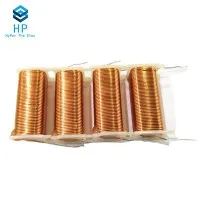
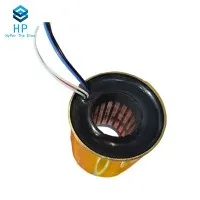
Before delving into their use in DC circuits, let's first understand what saturated reactors are. A saturated reactor is a type of magnetic amplifier that uses the saturation characteristics of a magnetic core. The basic principle is that the inductance of the reactor changes with the amount of DC magnetization in the core. When the core is unsaturated, the inductance is relatively high. As the DC current increases and the core starts to saturate, the inductance decreases.
This property makes saturated reactors useful for controlling AC power. By varying the DC control current, we can control the impedance of the reactor in the AC circuit, thereby regulating the AC power flow. But what about DC circuits?
Using Saturated Reactors in DC Circuits
In theory, the concept of using a saturated reactor in a DC circuit seems counter - intuitive at first. After all, the traditional function of a reactor is to oppose changes in current, and in a DC circuit, the current is constant (or at least relatively stable). However, there are scenarios where a saturated reactor can be effectively used in DC circuits.
One of the key applications is in current regulation. In a DC power system, maintaining a stable current is crucial for the proper operation of electrical equipment. A saturated reactor can be used as a current - limiting device. When the DC current exceeds a certain threshold, the magnetic core of the saturated reactor starts to saturate. As the core saturates, its inductance drops, and it allows the excess current to pass through with less opposition. This self - regulating property can protect the circuit from over - current conditions.
Another application is in DC motor control. DC motors require precise control of the current to achieve the desired speed and torque. A saturated reactor can be incorporated into the motor control circuit to adjust the current flowing to the motor. By varying the DC control current of the saturated reactor, we can change the impedance seen by the motor, effectively controlling the motor's performance.
Advantages of Using Saturated Reactors in DC Circuits
There are several advantages to using saturated reactors in DC circuits. Firstly, they offer a high degree of reliability. Unlike some solid - state current - regulating devices, saturated reactors have no electronic components that can fail due to voltage spikes or over - temperature conditions. They are essentially passive devices that rely on the magnetic properties of the core, which are very stable over time.
Secondly, saturated reactors are capable of handling high - power applications. They can be designed to handle large DC currents, making them suitable for industrial applications such as electrolysis plants, where large amounts of DC power are required.


Thirdly, they provide a simple and cost - effective solution for current regulation. Compared to more complex electronic control systems, saturated reactors are relatively inexpensive to manufacture and maintain.
Limitations
However, there are also limitations to using saturated reactors in DC circuits. One of the main limitations is the response time. Since the operation of a saturated reactor relies on the magnetic properties of the core, it has a relatively slow response time compared to electronic devices. This means that it may not be suitable for applications that require very fast current regulation, such as high - speed switching power supplies.
Another limitation is the size and weight. Saturated reactors typically require a large magnetic core to achieve the desired inductance and current - handling capabilities. This makes them bulky and heavy, which can be a drawback in applications where space and weight are critical factors, such as in aerospace or portable power systems.
Real - World Applications
In the industrial sector, saturated reactors are widely used in DC power systems for electroplating and welding. In electroplating, a stable DC current is required to ensure a uniform coating on the workpiece. A saturated reactor can be used to regulate the current, providing a consistent plating quality. In welding, the current needs to be precisely controlled to achieve a good weld. A saturated reactor can be used to adjust the welding current based on the type of material being welded and the welding parameters.
In the field of renewable energy, DC power systems are becoming increasingly important, especially in solar and wind power applications. Saturated reactors can be used in these systems to regulate the DC output from the solar panels or wind turbines. For example, in a solar power system, the output current of the solar panels can vary depending on the sunlight intensity. A saturated reactor can be used to stabilize the current before it is fed into the battery storage system or the grid.
Related Reactors
When considering the use of saturated reactors in DC circuits, it's also worth exploring related types of reactors. For example, the Variable Reactor offers the ability to adjust the reactance according to the specific requirements of the circuit. This can be useful in DC circuits where the current or voltage conditions may vary over time.
The Output Reactor is another option. It is designed to protect the load from voltage spikes and harmonics in the output of a power supply. In a DC circuit, an output reactor can be used in conjunction with a saturated reactor to provide additional protection and improve the overall performance of the circuit.
The Parallel Resonant Reactor can be used to create a resonant circuit in a DC system. This can be used for power factor correction or for filtering out specific frequencies from the DC current.
Conclusion
In conclusion, while the use of saturated reactors in DC circuits may not be as common as in AC circuits, there are certainly valid applications where they can provide significant benefits. Their reliability, high - power handling capabilities, and cost - effectiveness make them a viable option for many industrial and renewable energy applications. However, their limitations in terms of response time and size need to be carefully considered when selecting a current - regulating solution.
If you're interested in exploring the use of saturated reactors in your DC circuits, I encourage you to reach out to discuss your specific requirements. Our team of experts can provide you with detailed information and help you select the right saturated reactor for your application. Whether you're in the industrial sector, renewable energy field, or any other industry that requires DC power regulation, we're here to assist you.
References
- "Magnetic Amplifiers and Saturated Reactors" - Electrical Engineering Handbook
- "Power Electronics: Converters, Applications, and Design" - Mohan, Undeland, and Robbins
- "DC Power Systems: Design and Analysis" - Various industry whitepapers