


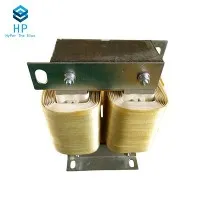

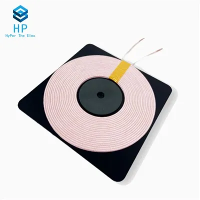

In the realm of electronics, toroidal inductors play a pivotal role in various applications, from power supplies to radio frequency (RF) circuits. As a trusted Toroidal Inductors supplier, I often encounter inquiries about the saturation current of these components. Understanding the saturation current is crucial for designers and engineers aiming to optimize the performance of their circuits. In this blog post, we will delve into the concept of saturation current in toroidal inductors, exploring its significance, factors affecting it, and how it impacts circuit design.
What is Saturation Current?
Saturation current refers to the maximum current that an inductor can carry before its magnetic core reaches a state of saturation. In an inductor, the magnetic field is generated by the current flowing through the coil. As the current increases, the magnetic field strength also increases proportionally, up to a certain point. However, once the magnetic core reaches its saturation point, the magnetic field can no longer increase linearly with the current. At this stage, the inductance of the inductor begins to decrease significantly, leading to a degradation in its performance.
To illustrate this concept, imagine a toroidal inductor with a magnetic core made of a ferromagnetic material. When a small current flows through the coil, the magnetic domains within the core align with the magnetic field, enhancing its strength. As the current increases, more and more domains align, and the magnetic field grows stronger. However, there is a limit to how many domains can align. Once this limit is reached, the core is said to be saturated, and any further increase in current will not result in a proportional increase in the magnetic field.
Significance of Saturation Current
The saturation current of a toroidal inductor is a critical parameter that directly affects its performance in a circuit. In power applications, such as BUCK Inductor circuits, the inductor stores energy in its magnetic field during the on-time of the switching cycle and releases it during the off-time. If the current exceeds the saturation current, the inductance drops, leading to increased ripple current and reduced efficiency. This can result in overheating, voltage instability, and even component failure.
In RF applications, the saturation current can also impact the performance of the circuit. For example, in a radio receiver, the inductor may be used as part of a tuned circuit to select a specific frequency. If the inductor saturates, the resonant frequency of the circuit may shift, leading to a loss of selectivity and a decrease in signal quality.
Factors Affecting Saturation Current
Several factors influence the saturation current of a toroidal inductor, including the core material, core size, number of turns, and operating temperature.
- Core Material: Different ferromagnetic materials have different saturation characteristics. Materials with high saturation flux density, such as ferrite and powdered iron, can handle higher currents before saturating. For example, ferrite cores are commonly used in high-frequency applications due to their low core losses and relatively high saturation flux density.
- Core Size: The size of the core also plays a role in determining the saturation current. Larger cores generally have a higher saturation current because they can accommodate more magnetic flux. However, larger cores also have higher losses and may be more expensive.
- Number of Turns: The number of turns in the coil affects the magnetic field strength and, consequently, the saturation current. Increasing the number of turns increases the inductance but also reduces the saturation current. This is because more turns mean more current is required to generate the same magnetic field strength, increasing the likelihood of saturation.
- Operating Temperature: The saturation current of a toroidal inductor decreases with increasing temperature. This is because the magnetic properties of the core material change with temperature, reducing its saturation flux density. Therefore, it is important to consider the operating temperature range when selecting an inductor.
Measuring Saturation Current
Measuring the saturation current of a toroidal inductor can be challenging, as it requires specialized equipment and techniques. One common method is to use a current source to gradually increase the current through the inductor while monitoring the inductance. As the current approaches the saturation current, the inductance will start to decrease. The saturation current is typically defined as the current at which the inductance drops to a certain percentage (e.g., 10% or 20%) of its initial value.


Another method is to use a magnetic field sensor to measure the magnetic field strength inside the core. As the current increases, the magnetic field strength will increase until the core saturates. The saturation current can then be determined by analyzing the relationship between the current and the magnetic field strength.
Selecting the Right Toroidal Inductor
When selecting a toroidal inductor for a specific application, it is important to choose one with a saturation current that meets the requirements of the circuit. Here are some tips to help you make the right choice:
- Determine the Maximum Current: Calculate the maximum current that the inductor will carry in the circuit. This may involve considering factors such as the load current, switching frequency, and duty cycle.
- Consider the Operating Conditions: Take into account the operating temperature range, ambient conditions, and any other factors that may affect the performance of the inductor.
- Choose the Right Core Material: Select a core material with a saturation flux density that is appropriate for the application. Consider factors such as frequency, core losses, and cost.
- Optimize the Design: Adjust the number of turns, core size, and other parameters to achieve the desired inductance and saturation current.
Conclusion
As a Toroidal Inductors supplier, we understand the importance of providing high-quality inductors with well-defined saturation current characteristics. Our team of experts can help you select the right inductor for your specific application, ensuring optimal performance and reliability.
If you are looking for a reliable supplier of toroidal inductors or have any questions about saturation current, please feel free to contact us. We are committed to providing you with the best products and services to meet your needs.
References
- “Inductor Design Handbook” by Colonel William T. McLyman
- “RF Circuit Design” by Chris Bowick
- “Power Electronics: Converters, Applications, and Design” by Ned Mohan, Tore M. Undeland, and William P. Robbins