


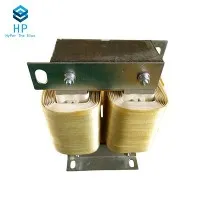

In the complex landscape of power systems, transient over - voltages are a critical concern that can significantly impact the reliability and safety of electrical networks. As a supplier of smoothing reactors, I've witnessed firsthand how these components play a pivotal role in managing transient over - voltages. In this blog, we'll explore the various ways in which a smoothing reactor affects the power system's transient over - voltages.
Understanding Transient Over - Voltages in Power Systems
Transient over - voltages are short - duration voltage spikes that can occur in power systems due to a variety of reasons. These include lightning strikes, sudden load changes, switching operations, and faults. These over - voltages can be extremely damaging to electrical equipment, leading to insulation breakdown, component failure, and even system outages.
Lightning strikes, for example, can introduce a massive amount of energy into the power system in a very short time. The sudden surge in voltage can propagate through the network, affecting transformers, generators, and other sensitive equipment. Similarly, when a large load is suddenly disconnected from the system, the electrical energy that was previously being consumed by the load has to go somewhere. This can result in a rapid increase in voltage, known as a switching transient.
The Role of Smoothing Reactors
Smoothing reactors are inductive components that are installed in power systems to perform several important functions, one of which is to mitigate transient over - voltages. They work by introducing inductance into the circuit, which has the effect of opposing changes in current.
Limiting the Rate of Rise of Current
When a transient event occurs, such as a short - circuit fault, the current in the power system can rise very rapidly. A smoothing reactor limits the rate of rise of this current. By doing so, it reduces the magnitude of the transient over - voltage that is generated. According to the laws of electromagnetism, the induced voltage across an inductor is proportional to the rate of change of current. So, by slowing down the rate of current change, the smoothing reactor reduces the induced over - voltage.
For instance, in a direct - current (DC) transmission system, smoothing reactors are often used to limit the rate of rise of current during a commutation failure. A commutation failure can occur when the thyristors in a converter station fail to turn off at the appropriate time, leading to a short - circuit condition. The smoothing reactor helps to control the current during this event, preventing excessive over - voltages from occurring.
Dampening Oscillations
Transient over - voltages can also be caused by oscillations in the power system. These oscillations can occur due to the interaction between inductive and capacitive elements in the network. A smoothing reactor can act as a damping element, reducing the amplitude of these oscillations.
In a power system, there are often capacitors used for power factor correction and voltage support. When a transient event occurs, the energy stored in these capacitors can interact with the inductance of the system, creating oscillations. The smoothing reactor provides additional inductance that helps to dampen these oscillations. It dissipates the energy stored in the oscillatory circuit over time, reducing the magnitude of the over - voltage.
Filtering High - Frequency Components
Transient over - voltages often contain high - frequency components. These high - frequency components can be particularly damaging to electrical equipment, as they can cause insulation stress and interference with control systems. A smoothing reactor can act as a low - pass filter, allowing low - frequency power to pass through while attenuating high - frequency components.
The inductive reactance of a smoothing reactor increases with frequency. So, high - frequency transient components encounter a higher impedance when passing through the reactor, while the low - frequency power frequency components experience relatively low impedance. This helps to filter out the high - frequency over - voltages, protecting the equipment in the power system.
Comparison with Other Reactor Types
In addition to smoothing reactors, there are other types of reactors used in power systems, such as Current Limiting Reactor, Balancing Reactor, and Flat Wave Reactor. While these reactors also play important roles in power system operation, their functions are somewhat different from those of smoothing reactors.
Current limiting reactors are primarily designed to limit the short - circuit current in a power system. They are used to protect equipment from damage during a fault by reducing the magnitude of the fault current. Balancing reactors are used to balance the currents in different phases of a multi - phase system, ensuring that the load is evenly distributed. Flat wave reactors, on the other hand, are used in DC systems to smooth out the ripple in the DC current.
However, smoothing reactors have a more general role in mitigating transient over - voltages. They can be used in both AC and DC systems, and their ability to dampen oscillations and filter high - frequency components makes them a versatile tool for transient over - voltage protection.


Practical Applications
Smoothing reactors are widely used in various power system applications, including:
HVDC Transmission Systems
In high - voltage direct - current (HVDC) transmission systems, smoothing reactors are an essential component. They are installed at the DC side of the converter stations to smooth the DC current and to limit the rate of rise of current during faults. This helps to maintain the stability of the HVDC system and to protect the converter equipment from damage.
Power Electronic Converters
Power electronic converters, such as those used in variable - speed drives and renewable energy systems, can generate transient over - voltages during switching operations. Smoothing reactors are used in these converters to reduce the magnitude of these over - voltages. They help to improve the reliability and efficiency of the converters by protecting the semiconductor devices from voltage stress.
Industrial Power Systems
In industrial power systems, smoothing reactors are used to protect sensitive equipment from transient over - voltages. For example, in a large manufacturing plant, where there are many motors and other electrical loads, transient events can occur frequently. Smoothing reactors can be installed at the point of common coupling to protect the entire plant from the effects of these transients.
Conclusion
Smoothing reactors play a crucial role in the power system's ability to withstand transient over - voltages. By limiting the rate of rise of current, dampening oscillations, and filtering high - frequency components, they help to protect electrical equipment and ensure the reliable operation of the power system.
As a supplier of smoothing reactors, I understand the importance of providing high - quality products that are designed to meet the specific needs of each power system application. Our smoothing reactors are engineered to have precise inductance values and excellent damping characteristics, ensuring optimal performance in transient over - voltage mitigation.
If you are looking for a reliable solution to protect your power system from transient over - voltages, I encourage you to reach out to us. We can provide you with detailed technical information and support to help you select the right smoothing reactor for your application. Contact us to start a procurement discussion and take the first step towards a more reliable and resilient power system.
References
- Anderson, P. M. (1999). Analysis of Faulted Power Systems. Iowa State University Press.
- Hingorani, N. G., & Gyugyi, L. (2000). Understanding FACTS: Concepts and Technology of Flexible AC Transmission Systems. IEEE Press.
- Kundur, P. (1994). Power System Stability and Control. McGraw - Hill.