


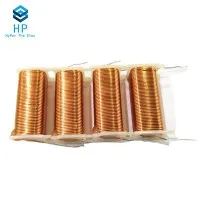

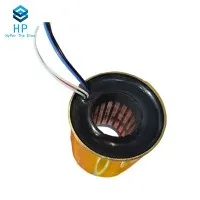

Hey there, fellow electronics enthusiasts and industry pros! I'm part of a Filter Inductor supplier, and today we're diving deep into a super important topic: how the core material affects the saturation characteristics of a filter inductor.


First off, let's quickly go over what a filter inductor is. A Filter Inductor is a key component in many electronic circuits. Its main job is to filter out unwanted frequencies and smooth the current flow. You'll find them in all sorts of applications, from power supplies to audio equipment.
Now, saturation is a crucial concept when it comes to inductors. When an inductor saturates, its inductance drops significantly. This can lead to all sorts of problems in a circuit, like increased ripple current, reduced efficiency, and even component damage. So, understanding how the core material affects saturation is essential for designing reliable and efficient circuits.
Different Core Materials and Their Impact on Saturation
Iron Core Inductors
Iron is a popular choice for inductor cores because it has a high magnetic permeability. This means it can store a large amount of magnetic energy, which is great for applications that require high inductance values. However, iron cores also have a relatively low saturation flux density.
When the magnetic field in an iron core inductor gets too strong, the core starts to saturate. Once saturation occurs, the inductance drops rapidly, and the inductor can no longer perform its filtering function effectively. This is a big drawback, especially in high-power applications where the current can get quite large.
Ferrite Core Inductors
Ferrite cores are another common option. They're made from a ceramic-like material that has a high resistivity. This makes them great for high-frequency applications because they have low eddy current losses.
In terms of saturation characteristics, ferrite cores have a moderate saturation flux density. They can handle higher magnetic fields than some other materials before saturating, but they're still not as good as some other options in high-power, low-frequency applications.
Powdered Iron Core Inductors
Powdered iron cores are made by compressing iron powder with a binder. This creates a core with a distributed air gap, which gives it some unique properties.
One of the main advantages of powdered iron cores is their relatively high saturation flux density. They can handle large currents without saturating as easily as iron or ferrite cores. This makes them a great choice for high-power BUCK Inductor applications, where the inductor needs to handle high currents and maintain a stable inductance.
Saturation and Inductor Design
When designing an inductor, engineers need to carefully consider the core material based on the expected operating conditions. If the application has a high current and low frequency, a powdered iron core might be the best choice. On the other hand, if the application is high frequency and low current, a ferrite core could be more suitable.
Let's take a look at an example. Suppose you're designing a power supply for a high-power audio amplifier. The power supply needs to provide a stable current to the amplifier without introducing too much noise. In this case, you'd want to choose an inductor with a core material that can handle the high current without saturating. A powdered iron core inductor might be a good option here.
Real-World Applications and Core Material Selection
Power Supplies
In power supplies, the choice of core material can have a big impact on the overall performance. For example, in a switch-mode power supply, the inductor needs to store and release energy efficiently. If the core material saturates too easily, the power supply won't be able to deliver the required power, and the output voltage might become unstable.
For low-power switch-mode power supplies, ferrite cores are often used because of their low losses at high frequencies. However, for high-power applications, powdered iron or laminated iron cores might be more appropriate to handle the high currents without saturating.
Audio Equipment
In audio equipment, the inductor is used to filter out unwanted frequencies and provide a clean power supply to the amplifier. The core material needs to have low distortion and good frequency response.
Ferrite cores are commonly used in audio applications because they have low losses at audio frequencies and can provide a stable inductance. However, in some high-end audio systems, toroidal inductors with special core materials might be used to achieve even better performance. Toroidal Inductors have a unique shape that reduces electromagnetic interference and can provide a more uniform magnetic field.
Conclusion and Call to Action
So, as you can see, the core material plays a crucial role in the saturation characteristics of a filter inductor. Choosing the right core material can make a big difference in the performance and reliability of your electronic circuits.
If you're in the market for high-quality filter inductors, we've got you covered. Our team of experts can help you select the right inductor for your specific application, taking into account factors like core material, saturation characteristics, and operating conditions. Whether you need a Filter Inductor, a BUCK Inductor, or a Toroidal Inductor, we have a wide range of options to meet your needs.
Don't hesitate to reach out to us to discuss your requirements and start a purchase negotiation. We're here to provide you with the best solutions and support for your projects.
References
- Grover, F. W. (1946). Inductance Calculations: Working Formulas and Tables. Dover Publications.
- Terman, F. E. (1955). Electronic and Radio Engineering. McGraw-Hill Book Company.
- Middlebrook, R. D. (1976). Fundamental Properties of Peak and Average Current-Mode Control. California Institute of Technology.