


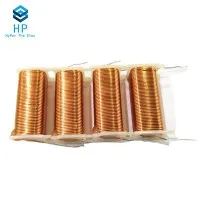

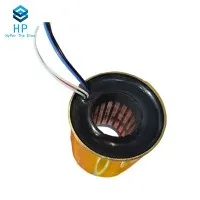

In the field of electrical engineering, saturated reactors play a crucial role in a wide range of applications, from power transmission and distribution to industrial control systems. As a supplier of saturated reactors, understanding how the saturation point varies with different materials is not only fundamental to producing high - quality products but also essential for meeting the diverse needs of our customers.
The Concept of Saturation Point in a Reactor
Before delving into the relationship between materials and saturation points, it is essential to clarify what the saturation point means in the context of a reactor. A reactor, such as a Parallel Resonant Reactor, Output Reactor, or Series Resonant Reactor, is a coil of wire that stores energy in a magnetic field. When an electric current flows through the coil, it creates a magnetic flux. As the current increases, the magnetic flux density also increases.
However, there is a limit to how much magnetic flux density a material can support. The saturation point is defined as the point at which an increase in the magnetic field strength (produced by increasing the current) results in only a minimal increase in the magnetic flux density. Beyond this point, the material cannot be further magnetized effectively, and the reactor starts to exhibit different electrical characteristics, which can have significant impacts on the performance of the overall electrical system.
Influence of Different Materials on the Saturation Point
Ferromagnetic Materials
- Iron
Iron is one of the most commonly used materials in reactors due to its high magnetic permeability. Magnetic permeability is a measure of how easily a material can be magnetized. In an iron - core saturated reactor, the saturation point occurs at a relatively high magnetic field strength. This is because iron has a large number of magnetic domains, which can align in the direction of the applied magnetic field. As the current in the reactor coil increases, these domains start to align, and the magnetic flux density rises.
However, once most of the domains are aligned, further increases in the magnetic field strength have little effect on the flux density, and the iron core reaches saturation. The saturation flux density of pure iron is typically around 2.15 T (tesla). This relatively high saturation point makes iron suitable for applications where high magnetic flux densities are required, such as in large - scale power transformers and some high - power reactors.
- Silicon Steel
Silicon steel, also known as electrical steel, is an alloy of iron with a small amount of silicon (usually around 2 - 3%). The addition of silicon improves the electrical resistivity of the material, reducing eddy current losses. These losses occur when changing magnetic fields induce circulating currents within the conductor, which can cause heating and energy loss.
In terms of the saturation point, silicon steel has a slightly lower saturation flux density compared to pure iron, typically around 1.8 - 2.0 T. However, its lower eddy current losses make it a preferred choice for many reactor applications, especially those operating at high frequencies. For example, in some industrial motor drives that use reactors for power factor correction, silicon - steel - cored reactors can provide better efficiency and performance.
Ferrite Materials
- Manganese - Zinc Ferrite
Manganese - zinc ferrite is a type of soft magnetic ferrite material. It has a relatively low saturation flux density, typically in the range of 0.3 - 0.5 T. However, it has a high initial magnetic permeability and low core losses at high frequencies. This makes it suitable for applications where the reactor operates at high frequencies, such as in switching power supplies and some communication equipment.
The low saturation point of manganese - zinc ferrite means that it can be easily saturated at relatively low magnetic field strengths. But in high - frequency applications, the lower saturation point is often acceptable because the magnetic fields involved are usually not very strong, and the focus is on minimizing losses and achieving high - speed magnetic response.


- Nickel - Zinc Ferrite
Nickel - zinc ferrite is another type of ferrite material. It has an even lower saturation flux density compared to manganese - zinc ferrite, usually around 0.1 - 0.3 T. However, it has a higher resistivity, which makes it suitable for very high - frequency applications, such as in radio - frequency (RF) circuits.
In RF reactors, the magnetic fields are typically very weak, and the main requirement is to have a material that can operate efficiently at high frequencies without significant losses. The low saturation point of nickel - zinc ferrite is not a drawback in these applications but rather a characteristic that allows for better performance in high - frequency environments.
Practical Implications for Reactor Design and Application
The variation in saturation points with different materials has significant practical implications for reactor design and application. When designing a saturated reactor, engineers need to carefully select the core material based on the specific requirements of the application.
For applications where high power and high magnetic flux densities are needed, such as in power transmission and large - scale industrial motors, materials with high saturation points like iron or silicon steel are preferred. These materials can handle large currents and magnetic fields without saturating easily, ensuring stable and efficient operation of the reactor.
On the other hand, for high - frequency applications, such as in modern electronics and communication systems, ferrite materials with lower saturation points are more suitable. Their ability to operate efficiently at high frequencies and low magnetic fields makes them ideal for reducing losses and improving the overall performance of the electrical system.
In addition, understanding the saturation characteristics of different materials is also important for protecting the reactor and the associated electrical equipment. If a reactor operates beyond its saturation point, it can lead to increased current, overheating, and potentially damage to the reactor and other components in the system. Therefore, proper design and material selection are crucial to ensure the safe and reliable operation of the reactor.
Conclusion and Call to Action
As a saturated reactor supplier, we understand the critical role that the saturation point plays in the performance of reactors. By offering a wide range of reactors with different core materials, we can meet the diverse needs of our customers across various industries.
Whether you are looking for a Parallel Resonant Reactor, Output Reactor, or Series Resonant Reactor, our team of experts can help you select the most suitable reactor based on your specific requirements. We are committed to providing high - quality products and excellent customer service.
If you are interested in learning more about our saturated reactors or would like to discuss your specific needs, please feel free to contact us. We look forward to the opportunity to work with you and contribute to the success of your projects.
References
- [1] Grover, F. W. (1946). Inductance Calculations: Working Formulas and Tables. Dover Publications.
- [2] Chapman, S. J. (2012). Electric Machinery Fundamentals. McGraw - Hill Education.
- [3] Brauer, G. (2004). Magnetic Materials and Their Applications. Wiley - VCH.