


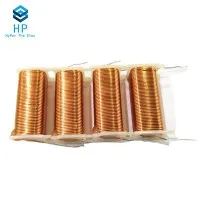

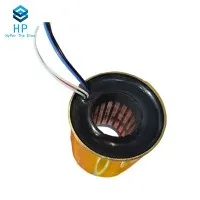

Selecting the right filter inductor for a switching power supply is a critical task that significantly impacts the performance and reliability of the power supply system. As a filter inductor supplier, I understand the challenges and complexities involved in this process. In this blog post, I will share some key considerations and guidelines to help you make an informed decision when choosing a filter inductor for your switching power supply.
Understanding the Role of Filter Inductors in Switching Power Supplies
Before delving into the selection process, it's essential to understand the role of filter inductors in switching power supplies. A switching power supply operates by rapidly switching the input voltage on and off to convert it to the desired output voltage. This switching action generates high - frequency noise and ripple, which can interfere with the proper functioning of electronic devices connected to the power supply.


Filter inductors are used to smooth out the current and voltage waveforms, reducing the ripple and suppressing the high - frequency noise. They work by storing energy in their magnetic fields during the on - time of the switching cycle and releasing it during the off - time. This energy storage and release mechanism helps to maintain a more constant current flow and reduces the voltage fluctuations.
Key Parameters for Filter Inductor Selection
Inductance Value
The inductance value (L) is one of the most important parameters when selecting a filter inductor. It determines the amount of energy the inductor can store and the degree of ripple reduction. A higher inductance value generally results in lower ripple current, but it also increases the size and cost of the inductor.
The required inductance value can be calculated based on the specifications of the switching power supply, such as the input and output voltages, the switching frequency, and the maximum allowable ripple current. For a BUCK Inductor in a BUCK converter, the inductance value can be estimated using the following formula:
[L=\frac{(V_{in}-V_{out})D}{f_{s}\Delta I_{L}}]
where (V_{in}) is the input voltage, (V_{out}) is the output voltage, (D) is the duty cycle of the switching signal, (f_{s}) is the switching frequency, and (\Delta I_{L}) is the peak - to - peak ripple current.
Current Rating
The current rating of the filter inductor is another crucial parameter. It should be able to handle the maximum current that will flow through it without saturating. Saturation occurs when the magnetic core of the inductor reaches its maximum magnetic flux density, and the inductance value drops significantly. This can lead to increased ripple current, reduced efficiency, and potential damage to the inductor and other components in the power supply.
When selecting an inductor, you need to consider both the DC current and the AC ripple current. The total current flowing through the inductor is the sum of these two components. Make sure to choose an inductor with a current rating that exceeds the maximum expected current in your application.
DC Resistance (DCR)
The DC resistance of the inductor affects the power loss and efficiency of the switching power supply. A lower DCR results in less power dissipation in the inductor, which in turn improves the overall efficiency of the power supply. However, reducing the DCR usually requires using a larger wire gauge or a more complex winding structure, which can increase the size and cost of the inductor.
When evaluating the DCR, you should also consider the temperature coefficient of resistance. As the temperature of the inductor increases during operation, the DCR will also increase, which can further affect the efficiency and performance of the power supply.
Saturation Current
As mentioned earlier, saturation current is the maximum current at which the inductor's inductance value drops to a specified percentage (usually 10% - 30%) of its initial value. It is important to choose an inductor with a saturation current that is higher than the maximum current in your application to avoid saturation.
Frequency Response
The frequency response of the filter inductor is important for suppressing high - frequency noise. The inductor should have a high impedance at the switching frequency and its harmonics to effectively filter out the noise. Some inductors are designed with specific frequency characteristics to meet the requirements of different applications.
Core Material Selection
The core material of the filter inductor has a significant impact on its performance. Different core materials have different magnetic properties, such as permeability, saturation flux density, and core loss.
Iron Powder Cores
Iron powder cores are commonly used in filter inductors due to their relatively high saturation flux density and low cost. They have a distributed air gap, which helps to reduce the core loss and prevent saturation. However, their permeability is relatively low, which means that a larger volume of core material is required to achieve a given inductance value.
Ferrite Cores
Ferrite cores have a high permeability, which allows for a smaller inductor size for a given inductance value. They also have low core loss at high frequencies, making them suitable for high - frequency switching power supplies. However, ferrite cores have a relatively low saturation flux density, so they may not be suitable for applications with high current requirements.
Powdered Iron Cores
Powdered iron cores offer a good balance between high saturation flux density and low core loss. They are suitable for applications that require both high current handling and good high - frequency performance.
Physical Considerations
Size and Shape
The size and shape of the filter inductor are important considerations, especially in applications where space is limited. You need to choose an inductor that can fit into the available space in your power supply design. Some inductors are available in surface - mount packages, which are suitable for printed circuit board (PCB) designs, while others are available in through - hole packages.
Mounting Orientation
The mounting orientation of the inductor can also affect its performance. Some inductors are sensitive to the magnetic field generated by other components in the vicinity. Make sure to consider the mounting orientation and the magnetic coupling between the inductor and other components when designing your power supply.
Application - Specific Considerations
EMI/EMC Requirements
In many applications, electromagnetic interference (EMI) and electromagnetic compatibility (EMC) are important considerations. The filter inductor can play a crucial role in reducing EMI by suppressing high - frequency noise. You may need to choose an inductor with specific shielding or filtering characteristics to meet the EMI/EMC requirements of your application.
Temperature and Environmental Conditions
The operating temperature and environmental conditions can also affect the performance of the filter inductor. Make sure to choose an inductor that can operate within the temperature range and environmental conditions of your application. Some inductors are designed to withstand high temperatures, humidity, and vibration.
Why Choose Our Filter Inductor
As a leading filter inductor supplier, we offer a wide range of Filter Inductors that are designed to meet the diverse needs of switching power supply applications. Our inductors are manufactured using high - quality materials and advanced manufacturing processes to ensure reliable performance and high efficiency.
We have a team of experienced engineers who can provide technical support and assistance in selecting the right inductor for your specific application. Whether you need a standard inductor or a custom - designed solution, we can work with you to meet your requirements.
If you are in the process of selecting a filter inductor for your switching power supply, we invite you to contact us for a consultation. Our sales team will be happy to discuss your needs and provide you with detailed product information and pricing. We look forward to working with you to find the best filter inductor solution for your application.
References
- Erickson, R. W., & Maksimovic, D. (2001). Fundamentals of Power Electronics. Springer.
- Mohan, N., Undeland, T. M., & Robbins, W. P. (2003). Power Electronics: Converters, Applications, and Design. John Wiley & Sons.