


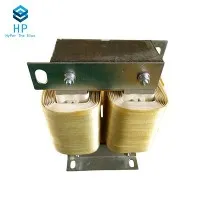



Hey there! As a supplier of Balancing Reactors, I've been in the thick of the electrical component game for quite some time. One question that often pops up from our clients is about the impact of vibration on the performance of a Balancing Reactor. So, let's dive right into it and break down what's really going on when these reactors start to shake.
First off, what's a Balancing Reactor? Well, it's a key player in electrical systems. It helps balance the current flow between different phases or circuits, ensuring that everything runs smoothly. Think of it as the traffic cop of your electrical network, directing the flow of electricity to prevent any chaos. And just like a traffic cop needs a stable platform to do their job, a Balancing Reactor needs to be in a stable environment to perform at its best.
Now, let's talk about vibration. Vibration can come from all sorts of sources in an industrial setting. It could be from nearby machinery, motors, or even the natural movement of the building itself. When a Balancing Reactor is exposed to vibration, it can have several negative effects on its performance.
One of the most immediate impacts is on the internal components of the reactor. Inside a Balancing Reactor, there are coils, cores, and other parts that are carefully designed and assembled to work together. Vibration can cause these parts to move slightly out of position. Over time, this can lead to loose connections, which can increase electrical resistance. And as we all know, increased resistance means more energy is wasted in the form of heat. This not only reduces the efficiency of the reactor but can also shorten its lifespan.


Another issue is related to the mechanical integrity of the reactor. The constant shaking can put stress on the physical structure of the reactor. This can cause cracks or fractures in the housing or other components. Once these structural weaknesses develop, they can lead to more serious problems, such as electrical shorts or even complete failure of the reactor.
Vibration can also affect the electrical characteristics of the reactor. The inductance and impedance of the reactor, which are crucial for its proper functioning, can change due to the movement of the internal components. This can disrupt the balance of the electrical system and lead to issues like voltage fluctuations and harmonic distortion. These problems can not only damage other equipment in the system but can also cause power quality issues that can affect the overall performance of the facility.
Let's take a look at some real - world examples. In a manufacturing plant, there was a Balancing Reactor installed near a large industrial compressor. The compressor generated a significant amount of vibration, which was transmitted to the reactor. Over a few months, the operators noticed that the power consumption of the electrical system had increased, and there were some strange electrical noises coming from the reactor area. When they inspected the reactor, they found that some of the internal connections had become loose due to the vibration, and the reactor's efficiency had dropped by about 15%. This not only cost the plant more money in electricity bills but also required them to replace the reactor earlier than expected.
So, what can be done to mitigate the impact of vibration on a Balancing Reactor? Well, one option is to use vibration - isolation mounts. These mounts are designed to absorb and dampen the vibration before it reaches the reactor. They can be made of rubber, spring, or other materials that have good vibration - absorbing properties. By installing these mounts, the amount of vibration transferred to the reactor can be significantly reduced.
Another approach is to carefully select the location for the reactor installation. Try to avoid placing it near sources of high vibration, such as large motors or heavy machinery. If possible, choose a stable and vibration - free area in the facility.
As a Balancing Reactor supplier, we offer a range of products that are designed to withstand vibration to some extent. We use high - quality materials and advanced manufacturing techniques to ensure that our reactors are robust and reliable. Our reactors are also regularly tested to meet the highest industry standards.
In addition to Balancing Reactors, we also supply other types of reactors, such as Power Factor Compensation Reactor, Current Limiting Reactor, and Flat Wave Reactor. These reactors play important roles in different electrical applications and are also engineered to perform well in various environments.
If you're in the market for a Balancing Reactor or any of our other products, we'd love to have a chat with you. Whether you're dealing with vibration issues or just need a reliable electrical component for your system, our team of experts can help you find the right solution. We can provide you with detailed product information, technical support, and competitive pricing. So, don't hesitate to reach out and start a conversation about your specific requirements.
In conclusion, vibration can have a significant impact on the performance of a Balancing Reactor. It can affect the internal components, mechanical integrity, and electrical characteristics of the reactor, leading to reduced efficiency, shortened lifespan, and potential system failures. However, by taking appropriate measures such as using vibration - isolation mounts and careful installation, these issues can be minimized. And as your trusted supplier, we're here to support you every step of the way.
References
- Electrical Engineering Handbook, various editions
- Industry reports on electrical reactor performance and reliability