


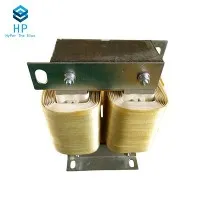

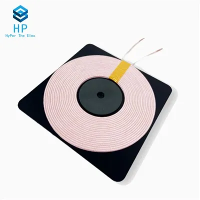

In the realm of power electronics, switching power supplies have become the cornerstone of modern electrical systems, powering everything from consumer electronics to industrial machinery. Among the key components in a switching power supply, the BUCK inductor plays a crucial role. As a leading BUCK Inductor supplier, I am excited to share the numerous advantages of using a BUCK inductor in a switching power supply.
Efficient Voltage Regulation
One of the primary advantages of using a BUCK inductor in a switching power supply is its ability to efficiently regulate voltage. A BUCK converter, which incorporates a BUCK inductor, is designed to step down a higher input voltage to a lower output voltage. This is achieved through a process of switching the inductor between charging and discharging states. When the switch in the converter is closed, current flows through the inductor, storing energy in its magnetic field. When the switch is opened, the inductor releases the stored energy, maintaining the current flow to the load.
This switching action allows the BUCK converter to achieve high efficiency, as it minimizes the power loss associated with traditional linear voltage regulators. By regulating the output voltage through switching, the BUCK inductor can reduce power dissipation and improve overall energy efficiency. This is particularly important in applications where power consumption is a critical factor, such as battery-powered devices and energy-efficient lighting systems.
High Power Density
Another significant advantage of using a BUCK inductor in a switching power supply is its ability to achieve high power density. Power density refers to the amount of power that can be delivered per unit volume or weight of the power supply. In modern electronic devices, there is a growing demand for smaller and more compact power supplies without sacrificing performance.
The BUCK inductor, with its ability to handle high currents and store energy efficiently, allows for the design of power supplies with a high power density. By using a BUCK inductor, designers can reduce the size and weight of the power supply while still delivering the required power output. This is especially beneficial in applications where space is limited, such as portable electronics, automotive electronics, and aerospace systems.
Low Ripple and Noise
In addition to efficient voltage regulation and high power density, a BUCK inductor can also help to reduce ripple and noise in a switching power supply. Ripple refers to the small fluctuations in the output voltage of a power supply, while noise refers to the unwanted electrical signals that can interfere with the operation of electronic devices.
The BUCK inductor, with its ability to smooth out the current flow and filter out high-frequency components, can help to minimize ripple and noise in the power supply. By using a BUCK inductor in combination with other filtering components, such as capacitors, designers can achieve a clean and stable output voltage with low ripple and noise. This is crucial in applications where sensitive electronic components are used, such as audio equipment, medical devices, and communication systems.
Wide Range of Applications
The advantages of using a BUCK inductor in a switching power supply make it suitable for a wide range of applications. From consumer electronics to industrial automation, the BUCK inductor can be found in various power supply designs.
In consumer electronics, BUCK inductors are commonly used in mobile phones, tablets, laptops, and other portable devices to step down the battery voltage and power the internal components. In industrial automation, BUCK inductors are used in motor drives, power supplies for control systems, and other industrial equipment to regulate the voltage and improve energy efficiency.


In addition, BUCK inductors are also used in automotive electronics, renewable energy systems, and aerospace applications. In automotive electronics, BUCK inductors are used in power supplies for infotainment systems, lighting systems, and engine control units. In renewable energy systems, BUCK inductors are used in solar inverters and wind turbine generators to convert the DC power generated by the renewable energy sources into AC power for use in the grid. In aerospace applications, BUCK inductors are used in power supplies for avionics systems, communication systems, and other critical equipment.
Compatibility with Other Components
A BUCK inductor is also highly compatible with other components commonly used in a switching power supply. It can be easily integrated with MOSFETs (Metal-Oxide-Semiconductor Field-Effect Transistors), diodes, and capacitors to form a complete switching power supply circuit.
The compatibility of the BUCK inductor with other components allows for a flexible and modular design approach. Designers can choose the appropriate components based on the specific requirements of the application, such as input voltage, output voltage, current rating, and power efficiency. This flexibility makes it easier to optimize the performance of the power supply and meet the diverse needs of different applications.
Cost-Effectiveness
From a cost perspective, using a BUCK inductor in a switching power supply can be a cost-effective solution. The BUCK inductor, with its simple structure and relatively low cost of production, can help to reduce the overall cost of the power supply.
Compared to other types of inductors, such as PFC Inductor and Filter Inductor, the BUCK inductor is generally more affordable. Additionally, the high efficiency and power density of the BUCK inductor can lead to cost savings in terms of energy consumption and reduced component size.
Customization Options
As a BUCK Inductor supplier, we understand that different applications may have unique requirements. That's why we offer a wide range of customization options for our BUCK inductors. We can customize the inductance value, current rating, saturation current, and other parameters based on the specific needs of our customers.
Whether you need a BUCK inductor for a high-power application or a low-power, space-constrained design, we can work with you to develop a customized solution. Our experienced engineering team can provide technical support and guidance throughout the design process to ensure that the BUCK inductor meets your performance and reliability requirements.
Conclusion
In conclusion, the advantages of using a BUCK inductor in a switching power supply are numerous. From efficient voltage regulation and high power density to low ripple and noise, the BUCK inductor offers significant benefits in terms of performance, energy efficiency, and cost-effectiveness.
As a leading BUCK Inductor supplier, we are committed to providing high-quality BUCK inductors that meet the diverse needs of our customers. Our products are designed and manufactured to the highest standards of quality and reliability, ensuring optimal performance in a wide range of applications.
If you are interested in learning more about our BUCK inductors or have specific requirements for your switching power supply design, we invite you to contact us for a detailed discussion. Our sales team is ready to assist you with your procurement needs and provide you with the best solutions for your applications.
References
- Erickson, R. W., & Maksimovic, D. (2001). Fundamentals of Power Electronics. Springer Science & Business Media.
- Pressman, A. I., & Macneil, K. (2009). Switching Power Supply Design. McGraw-Hill Education.
- Mohan, N., Undeland, T. M., & Robbins, W. P. (2012). Power Electronics: Converters, Applications, and Design. John Wiley & Sons.