




Hey there, fellow tech enthusiasts! As a long - time inductor supplier, I'm always stoked to share the latest and greatest in the world of inductors. Inductors, those little components that play a big role in electronics, have seen some pretty cool technological advancements lately. Let's dive right in and check them out.
High - Frequency Performance Improvements
One of the most significant advancements is in the area of high - frequency performance. In modern electronics, the demand for high - speed data transfer and high - frequency operation is skyrocketing. Traditional inductors often faced limitations such as high core losses and reduced inductance at high frequencies.
But new materials and design techniques have come to the rescue. For instance, the development of advanced ferrite materials with better magnetic properties has enabled inductors to operate more efficiently at higher frequencies. These new ferrites have lower hysteresis and eddy - current losses, which means less energy is wasted as heat. It's a game - changer for applications like 5G communication systems, where high - frequency signals need to be filtered and processed accurately.
Another approach is the use of thin - film technology. Thin - film inductors can be fabricated with very precise dimensions, which allows for better control of their electrical properties at high frequencies. They can be integrated directly onto the circuit board, reducing the overall size of the electronic device. This is super important for portable devices like smartphones and wearables, where space is at a premium.
Check out our Filter Inductor which benefits a lot from these high - frequency advancements and can effectively filter high - frequency noise.
Miniaturization and Integration
In today's world, smaller is often better. The trend towards miniaturization in electronics has had a huge impact on inductor technology. Manufacturers have been working hard to make inductors smaller without sacrificing their performance.
One way this is being achieved is through 3D integration. Instead of the traditional 2D layout, inductors can now be built in multiple layers, stacking different components on top of each other. This allows for a much more compact design while still maintaining or even improving the electrical characteristics.
Multi - layer ceramic inductors (MLCIs) are a prime example. These inductors are made by stacking multiple ceramic layers with conductive patterns in between. The result is a tiny inductor with high capacitance and low equivalent series resistance (ESR). MLCIs are widely used in mobile devices, because they can handle high - frequency signals and take up very little space on the circuit board.
We also offer Toroidal Inductors that have been miniaturized. Their toroidal shape not only gives them good magnetic properties but also allows for a more space - efficient design compared to some other types of inductors.
Enhanced Power Density
Power density is another area where we've seen remarkable progress. Electronic devices are demanding more power, but they also need to be as energy - efficient as possible. This has led to the development of inductors with higher power density.
New winding techniques have been introduced to reduce the resistance of the inductor coils. By using thicker wires or more advanced winding patterns, the inductor can handle more current without overheating. This is crucial for high - power applications such as power supplies for servers and electric vehicles.
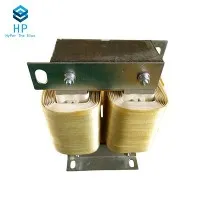
In addition, improvements in core materials have played a big part in enhancing power density. Some new core materials can store more magnetic energy, which means the inductor can deliver more power in a smaller package. Our Three - phase Inductor is a great example of this. It's designed to handle high - power three - phase systems with high efficiency, thanks to its advanced core and winding design.
Smart Inductors and IoT Integration
The rise of the Internet of Things (IoT) has opened up a whole new world of possibilities for inductors. Smart inductors are being developed that can communicate and interact with other components in the system.
These smart inductors can monitor their own performance, such as temperature, current, and inductance. They can then adjust their operation based on the data they collect. For example, if the temperature of the inductor gets too high, it can automatically reduce the current flow to prevent damage.
In IoT applications, smart inductors can be used in wireless sensor networks. They can help with energy harvesting, power management, and signal processing. This integration of inductors with IoT technology is making our devices more intelligent and efficient.


Customization and Flexibility
As the needs of different industries become more diverse, there's a growing demand for customized inductors. We, as a supplier, understand that one size doesn't fit all. That's why we offer a high degree of customization in our inductor manufacturing.
We can customize the inductance value, the current rating, the size, and the shape of the inductor according to the specific requirements of our customers. Whether it's for a medical device, an aerospace application, or a consumer product, we can tailor - make the perfect inductor for the job.
This flexibility also extends to the materials we use. We work with a wide range of materials, from traditional ferrites to new composite materials. This allows us to meet different performance and cost requirements.
Environmental Considerations
In recent years, environmental concerns have become a major factor in technology development. The inductor industry is no exception. Manufacturers are now looking for ways to make their products more environmentally friendly.
One approach is to use lead - free soldering materials in the inductor manufacturing process. This helps to reduce the amount of toxic substances released into the environment. Additionally, some companies are working on developing biodegradable or recyclable inductor materials.
At our company, we're committed to environmental sustainability. We're constantly researching and implementing new technologies to minimize our environmental impact while still delivering high - quality inductors.
Connecting with Us
If you're in the market for inductors, whether it's for a new project or an upgrade to an existing one, we'd love to hear from you. Our team of experts is always ready to help you find the perfect inductor solution for your needs. We can provide detailed technical support and offer competitive pricing. So, don't hesitate to reach out and start a conversation about your inductor requirements.
References
- "Handbook of Inductors and Transformers for Power Electronics" by Marian K. Kazimierczuk
- "High - Frequency Inductors and Transformers Design Handbook" by Colonel Wm. T. McLyman