


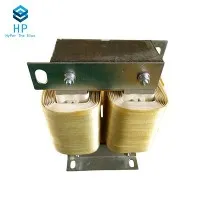

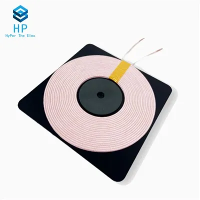

Toroidal inductors are essential components in various electronic circuits, offering unique advantages such as high inductance, low electromagnetic interference (EMI), and compact size. As a toroidal inductor supplier, we understand the importance of adhering to strict standards and specifications to ensure the quality and performance of our products. In this blog post, we will explore the key standards and specifications for toroidal inductors, providing valuable insights for both engineers and procurement professionals.
Electrical Specifications
Inductance (L)
Inductance is one of the most critical parameters of a toroidal inductor. It is measured in henries (H) and represents the ability of the inductor to store energy in a magnetic field. The inductance value of a toroidal inductor is determined by several factors, including the number of turns, the core material, and the cross - sectional area of the core.
For a toroidal inductor, the inductance can be calculated using the formula:
[L=\frac{\mu N^{2}A}{l}]
where (\mu) is the permeability of the core material, (N) is the number of turns, (A) is the cross - sectional area of the core, and (l) is the mean magnetic path length.
In practical applications, the required inductance value depends on the specific circuit requirements. For example, in a power supply filter circuit, a higher inductance value is often needed to effectively filter out unwanted frequencies. Our toroidal inductors are available in a wide range of inductance values, from a few microhenries ((\mu H)) to several henries (H), to meet the diverse needs of different applications.
DC Resistance (DCR)
DC resistance is the resistance of the inductor's winding to direct current. It is an important parameter as it affects the power loss and efficiency of the inductor. A lower DCR means less power is dissipated as heat, resulting in higher efficiency.
The DCR of a toroidal inductor is mainly determined by the wire gauge and the length of the winding. Thicker wire generally has a lower DCR, but it may also increase the size and cost of the inductor. We carefully select the wire gauge and winding design to optimize the DCR while maintaining the desired inductance value.
Current Rating
The current rating of a toroidal inductor is the maximum current that the inductor can carry without exceeding its temperature limit. Exceeding the current rating can cause the inductor to overheat, which may lead to performance degradation or even failure.


The current rating is influenced by factors such as the wire gauge, the core material, and the cooling conditions. We conduct extensive testing to determine the current rating of our toroidal inductors under different operating conditions. Our products are designed to handle a wide range of currents, from a few milliamperes to several amperes, depending on the application requirements.
Mechanical Specifications
Core Material
The core material of a toroidal inductor plays a crucial role in determining its performance. Different core materials have different magnetic properties, such as permeability, saturation flux density, and loss characteristics.
Common core materials for toroidal inductors include ferrite, powdered iron, and laminated cores. Ferrite cores are widely used due to their high permeability and low core losses at high frequencies. Powdered iron cores offer good saturation characteristics and are suitable for applications with high - current requirements. Laminated cores are often used in power transformers and inductors where low eddy - current losses are essential.
We offer toroidal inductors with a variety of core materials to meet the specific needs of different applications. Our technical team can provide guidance on selecting the most appropriate core material based on the application requirements.
Size and Dimensions
The size and dimensions of a toroidal inductor are important considerations, especially in applications where space is limited. We offer toroidal inductors in a range of sizes, from small surface - mount devices to large power inductors.
The outer diameter, inner diameter, and height of the toroid are the main dimensions that define the size of the inductor. We ensure that our toroidal inductors are designed to meet the industry - standard dimensions, making them compatible with a wide range of circuit boards and mounting configurations.
Environmental Specifications
Temperature Range
The operating temperature range of a toroidal inductor is an important specification. It determines the minimum and maximum temperatures at which the inductor can operate reliably.
Most toroidal inductors are designed to operate within a temperature range of - 40°C to + 125°C. However, in some special applications, such as automotive or aerospace, higher or lower temperature ranges may be required. We offer toroidal inductors that can withstand extreme temperatures, ensuring reliable performance in harsh environments.
Humidity and Moisture Resistance
Humidity and moisture can have a significant impact on the performance and reliability of toroidal inductors. High humidity can cause corrosion of the winding and the core, leading to increased resistance and reduced inductance.
Our toroidal inductors are designed to be resistant to humidity and moisture. We use special coatings and encapsulation materials to protect the inductor from environmental factors, ensuring long - term reliability.
Applications and Related Products
Toroidal inductors are used in a wide range of applications, including power supplies, audio amplifiers, and communication systems. In power supplies, toroidal inductors are commonly used as Filter Inductor to remove ripple and noise from the DC output. They are also used as PFC Inductor in power factor correction circuits to improve the efficiency of the power supply.
In audio amplifiers, toroidal inductors are used in the output stage to filter out high - frequency noise and improve the sound quality. In communication systems, toroidal inductors are used in RF circuits as Coil Inductor to tune the frequency and improve the signal strength.
Conclusion
As a toroidal inductor supplier, we are committed to providing high - quality products that meet the strictest standards and specifications. Our toroidal inductors are designed and manufactured with precision to ensure optimal performance in a wide range of applications.
If you are in need of toroidal inductors for your project, we invite you to contact us for a detailed discussion. Our experienced sales team can provide you with the technical support and product recommendations you need. We look forward to working with you to meet your specific requirements.
References
- Grover, F. W. (1946). Inductance Calculations: Working Formulas and Tables. Dover Publications.
- Chen, W. K. (Ed.). (1986). The Electrical Engineering Handbook. CRC Press.
- Hurley, W. G., & Duffy, A. M. (2001). Power Electronics: Converters, Applications, and Design. Prentice Hall.