


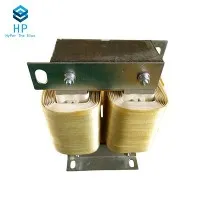

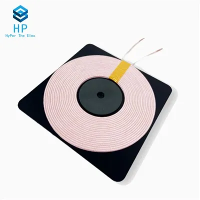

Hey there! As a supplier of Trap Coils, I often get asked about the energy storage capacity of these nifty little components. So, let's dive right in and explore what makes the energy storage capacity of a Trap Coil tick.
First off, what exactly is a Trap Coil? Well, it's a type of Trap Coil that's designed to block certain frequencies while allowing others to pass through. It's like a bouncer at a club, deciding who gets in and who doesn't based on their frequency "ID." Trap Coils are commonly used in radio frequency (RF) circuits, especially in antennas and filters.
Now, onto the energy storage capacity. The energy storage capacity of a Trap Coil is mainly determined by its inductance. Inductance is a measure of how much magnetic field a coil can create when an electric current flows through it. The higher the inductance, the more energy the coil can store in its magnetic field.
To understand this better, let's think about a simple analogy. Imagine a water tank. The size of the tank determines how much water it can hold. Similarly, the inductance of a Trap Coil determines how much magnetic energy it can store. When an electric current flows through the coil, it creates a magnetic field around it. This magnetic field stores energy, just like the water in the tank stores potential energy.
The formula for the energy stored in an inductor (like a Trap Coil) is given by E = 0.5 * L * I^2, where E is the energy stored, L is the inductance, and I is the current flowing through the coil. From this formula, we can see that the energy stored is directly proportional to the inductance and the square of the current. So, if we increase the inductance or the current, the energy storage capacity of the Trap Coil will increase.
But how do we calculate the inductance of a Trap Coil? Well, it depends on several factors, such as the number of turns in the coil, the cross - sectional area of the coil, the length of the coil, and the permeability of the core material (if there's a core).
The number of turns is a crucial factor. Generally, the more turns a coil has, the higher its inductance. It's like adding more loops to a rope. The more loops you have, the more "space" there is for the magnetic field to build up.
The cross - sectional area also plays a role. A larger cross - sectional area allows for a stronger magnetic field to be created, which in turn increases the inductance. It's similar to having a wider water tank; it can hold more water.


The length of the coil is inversely proportional to the inductance. A shorter coil will have a higher inductance compared to a longer coil with the same number of turns and cross - sectional area.
The permeability of the core material is another important factor. If the Trap Coil has a core made of a material with high permeability, like iron or ferrite, the magnetic field created by the current will be stronger, and the inductance will be higher. It's like having a special lining in the water tank that helps it hold more water.
Now, let's talk about how the energy storage capacity of a Trap Coil affects its performance in different applications.
In antenna systems, the energy storage capacity of the Trap Coil can impact the antenna's efficiency and frequency response. A Trap Coil with a higher energy storage capacity can store more energy in its magnetic field, which can help in better impedance matching and radiation efficiency. It can also help in filtering out unwanted frequencies, acting as a "trap" for those frequencies that we don't want in our antenna system.
For example, in a multi - band antenna, Trap Coils are used to isolate different frequency bands. The energy storage capacity of these coils determines how well they can block the unwanted frequencies and allow the desired frequencies to pass through. If the energy storage capacity is too low, the coil may not be able to effectively block the unwanted frequencies, leading to interference and poor antenna performance.
In filter circuits, the energy storage capacity of Trap Coils is also crucial. Filters are used to select or reject certain frequencies in a circuit. A Trap Coil with the right energy storage capacity can store and release energy at the right times to create a filter with the desired frequency response.
Let's take a look at some other types of coils that are related to Trap Coils, like Antenna Coils and Oscillating Coils.
Antenna Coils are used in antennas to help in the radiation and reception of electromagnetic waves. While they have some similarities with Trap Coils, their main focus is on coupling the electrical energy in the circuit to the electromagnetic field in space. The energy storage capacity of an Antenna Coil also affects its performance, but the requirements are different from those of a Trap Coil.
Oscillating Coils are used in oscillator circuits to generate alternating currents at a specific frequency. The energy storage capacity of an Oscillating Coil is important for maintaining the oscillation and determining the frequency stability of the oscillator.
As a Trap Coil supplier, I know how important it is to have the right energy storage capacity for different applications. That's why we offer a wide range of Trap Coils with different inductance values and energy storage capacities. Whether you're working on a small - scale hobby project or a large - scale industrial application, we can provide you with the perfect Trap Coil to meet your needs.
If you're in the market for Trap Coils and want to discuss your specific requirements, we're here to help. We can work with you to determine the ideal energy storage capacity and other specifications for your project. Just reach out to us, and we'll start the conversation. We're committed to providing high - quality Trap Coils that will enhance the performance of your circuits.
In conclusion, the energy storage capacity of a Trap Coil is a vital characteristic that affects its performance in various applications. It's determined by factors like inductance, which in turn depends on the number of turns, cross - sectional area, length, and core material. Understanding these concepts can help you make informed decisions when choosing Trap Coils for your projects.
References:
- "The Art of Electronics" by Paul Horowitz and Winfield Hill
- "RF Circuit Design" by Chris Bowick