




Hey there! As a supplier of resonant coils, I've been getting a bunch of questions lately about what it means to integrate resonant coils with other components. So, I thought I'd sit down and write this blog to share my thoughts and experiences on the topic.
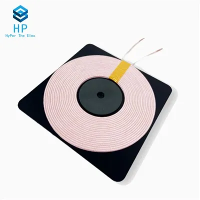
First off, let's quickly go over what resonant coils are. Resonant coils are basically coils that can store energy in a magnetic field and then release it at a specific frequency. They're used in all sorts of applications, from radio frequency (RF) circuits to wireless power transfer systems. The key thing about resonant coils is that they can resonate at a particular frequency, which makes them super useful for filtering and tuning circuits.
Now, when we talk about integrating resonant coils with other components, we're looking at combining these coils with things like capacitors, resistors, transistors, and even other types of coils. This integration can lead to some pretty cool and useful outcomes.
One of the most common integrations is with capacitors. When you combine a resonant coil with a capacitor, you get what's called an LC circuit (inductor - capacitor circuit). This circuit has a natural resonant frequency determined by the values of the inductor (the resonant coil) and the capacitor. LC circuits are used in a wide range of applications, such as radio receivers. In a radio, the LC circuit can be tuned to resonate at the frequency of a particular radio station. By adjusting the capacitance or the inductance, you can change the resonant frequency and tune in to different stations. It's like having a little frequency - selector in your radio!
Let's take a look at how this integration works in practice. Say you're building a simple AM radio receiver. You'll need a resonant coil and a variable capacitor. The resonant coil stores the magnetic energy, and the capacitor stores the electrical energy. When the values of the coil and the capacitor are just right, the circuit resonates at the frequency of the AM radio signal you want to receive. The incoming radio waves induce a current in the resonant coil, and because the circuit is tuned to the same frequency, it can pick up that specific signal while rejecting others. It's a really neat way to isolate the signal you're interested in.
Another important integration is with resistors. Resistors are used to control the flow of current in a circuit. When integrated with a resonant coil, resistors can help dampen the oscillations in the circuit. In some cases, too much energy can build up in the resonant coil, causing the circuit to oscillate wildly. A resistor can be added to the circuit to dissipate some of that energy and stabilize the oscillations. This is especially important in circuits where you need a stable and controlled output, like in some types of oscillators.
Now, let's talk about integrating resonant coils with transistors. Transistors are like the workhorses of modern electronics. They can amplify signals, switch circuits on and off, and perform other important functions. When combined with a resonant coil, transistors can be used to amplify the weak signals picked up by the coil. For example, in a wireless power transfer system, a resonant coil is used to receive the power from a transmitter. The weak electrical signal in the coil can be amplified by a transistor so that it can be used to power a device. This integration allows for more efficient power transfer and better performance of the overall system.
Resonant coils can also be integrated with other types of coils. For instance, Trap Coil is a type of coil that can be used in combination with a resonant coil to filter out unwanted frequencies. A trap coil is designed to have a high impedance at a specific frequency, which means it can block signals at that frequency from passing through the circuit. By integrating a trap coil with a resonant coil, you can create a more selective circuit that only allows the desired frequencies to pass through.


Antenna Coil is another important component that can be integrated with a resonant coil. Antenna coils are used to receive and transmit electromagnetic waves. When integrated with a resonant coil, they can enhance the performance of the antenna. The resonant coil can help tune the antenna to a specific frequency, making it more efficient at receiving or transmitting signals at that frequency.
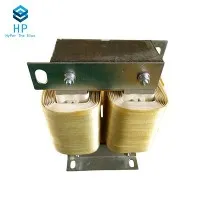
Choke Coil is also often integrated with resonant coils. A choke coil is designed to have a high impedance to alternating current (AC) while allowing direct current (DC) to pass through easily. In a circuit with a resonant coil, a choke coil can be used to block unwanted AC signals while allowing the DC bias current to flow. This helps in stabilizing the operation of the circuit and improving its overall performance.
The integration of resonant coils with other components can also lead to the development of new and innovative technologies. For example, in wireless charging systems, resonant coils are integrated with other components to create a more efficient and reliable way to transfer power wirelessly. These systems use resonant inductive coupling, where two resonant coils (one in the charger and one in the device) are tuned to the same frequency. When they are close enough, the energy can be transferred from the charger to the device without the need for a physical connection. This technology is becoming more and more popular in mobile devices, electric toothbrushes, and other consumer electronics.
In the field of medical devices, resonant coils integrated with other components are used in magnetic resonance imaging (MRI) machines. The resonant coils are used to generate and detect the magnetic fields needed to create detailed images of the human body. By integrating these coils with other electronic components, such as amplifiers and signal - processing circuits, MRI machines can produce high - quality images that are crucial for medical diagnosis.
As a resonant coil supplier, I've seen firsthand how these integrations are driving innovation in various industries. Whether it's in consumer electronics, telecommunications, or medical technology, the combination of resonant coils with other components is opening up new possibilities.
If you're in the business of developing electronic devices or systems that could benefit from the integration of resonant coils, I'd love to talk to you. We offer a wide range of resonant coils with different specifications to meet your specific needs. Whether you're looking for a coil for a small - scale project or a large - scale industrial application, we've got you covered. Feel free to reach out to start a conversation about how our resonant coils can be integrated into your designs and help you achieve better performance and functionality.
References:
- "The Art of Electronics" by Paul Horowitz and Winfield Hill
- "Electrical Engineering: Principles and Applications" by Allan R. Hambley
- Various industry - specific research papers on resonant circuits and component integration.