




Hey there! As a supplier of DC solenoid coils, I've been getting a lot of questions lately about how these nifty little gadgets actually work. So, I thought I'd take a few minutes to break it down for you in plain English.
Let's start with the basics. A DC solenoid coil is an electromagnetic device that converts electrical energy into mechanical motion. It's a pretty simple concept, but it's used in a wide range of applications, from automotive and industrial equipment to home appliances and medical devices.
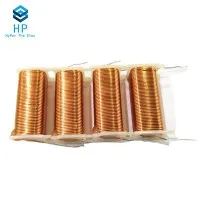
At the heart of a DC solenoid coil is a wire coil that's wrapped around a ferromagnetic core. When an electric current flows through the coil, it creates a magnetic field around the core. This magnetic field then interacts with a movable ferromagnetic plunger or armature, causing it to move.
The working principle of a DC solenoid coil can be explained using the right-hand rule. If you wrap your right hand around the coil with your fingers pointing in the direction of the current flow, your thumb will point in the direction of the magnetic field. The magnetic field created by the coil then exerts a force on the plunger, causing it to move either towards or away from the coil, depending on the direction of the current flow.
One of the key advantages of DC solenoid coils is their simplicity. They're relatively easy to design and manufacture, and they can be customized to meet the specific requirements of different applications. They're also highly reliable and durable, making them a popular choice for a wide range of industries.


Another advantage of DC solenoid coils is their efficiency. They consume less power than other types of electromagnetic devices, which makes them more energy-efficient and cost-effective. This is especially important in applications where power consumption is a concern, such as battery-powered devices.
Now, let's take a closer look at some of the different types of DC solenoid coils that are available. One of the most common types is the Solenoid Valve Coil. These coils are used to control the flow of fluids in a variety of applications, such as water valves, gas valves, and hydraulic valves. When an electric current is applied to the coil, it creates a magnetic field that moves the valve plunger, either opening or closing the valve.
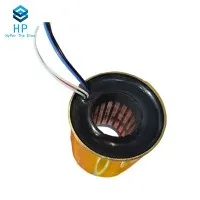
Another type of DC solenoid coil is the Encapsulated Coil. These coils are designed to be protected from the environment, making them suitable for use in harsh or corrosive conditions. They're typically encapsulated in a plastic or epoxy resin, which provides a barrier against moisture, dust, and other contaminants.
Finally, there's the DC Solenoid Coil itself. These coils are used in a wide range of applications, from automotive and industrial equipment to home appliances and medical devices. They're available in a variety of sizes and configurations, and they can be customized to meet the specific requirements of different applications.
So, there you have it! That's a basic overview of the working principle of a DC solenoid coil. I hope this article has been helpful in understanding how these devices work and why they're so important in a wide range of industries.
If you're interested in learning more about DC solenoid coils or if you're looking for a reliable supplier, please don't hesitate to get in touch. We'd be happy to answer any questions you may have and to help you find the right coil for your application. Just reach out, and we can start the conversation about your specific needs and how we can assist with your procurement.
References
- Halliday, D., Resnick, R., & Walker, J. (2014). Fundamentals of Physics. Wiley.
- Purcell, E. M., & Morin, D. J. (2013). Electricity and Magnetism. Cambridge University Press.