


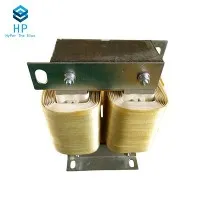

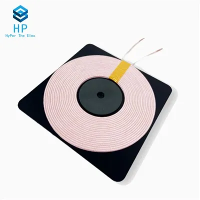

The tolerance of a BUCK inductor plays a crucial role in the performance and stability of a BUCK converter circuit. As a trusted BUCK Inductor supplier, we understand the significance of inductor tolerance and its far - reaching implications for electronic circuits. In this blog, we will explore how the tolerance of a BUCK inductor affects the circuit from multiple perspectives.
Understanding Inductor Tolerance
Before delving into the impact on the circuit, it's essential to understand what inductor tolerance means. Inductor tolerance refers to the allowable deviation of the actual inductance value from the nominal value specified by the manufacturer. For example, if a BUCK inductor has a nominal inductance of 10μH with a ±10% tolerance, the actual inductance can range from 9μH to 11μH. This deviation is a result of various factors during the manufacturing process, such as variations in the core material, winding turns, and manufacturing precision.
Effects on Output Voltage Regulation
One of the primary functions of a BUCK converter is to step - down the input voltage to a stable output voltage. The inductor tolerance can significantly affect the output voltage regulation. When the inductance value is higher than the nominal value (at the upper end of the tolerance range), the inductor current ripple decreases. A lower current ripple means that the energy stored and released by the inductor is more stable, which can lead to a more stable output voltage. However, if the inductance is too high, the transient response of the circuit may be slower, as the inductor takes longer to charge and discharge.


Conversely, when the inductance is lower than the nominal value (at the lower end of the tolerance range), the current ripple increases. A higher current ripple can cause the output voltage to fluctuate more, leading to poor voltage regulation. In extreme cases, it may even cause the output voltage to fall out of the acceptable range, affecting the proper operation of the load connected to the converter.
Impact on Efficiency
The efficiency of a BUCK converter is another critical aspect affected by the inductor tolerance. The inductor's resistance and the current flowing through it contribute to power losses in the form of heat. When the inductance is within the optimal range, the current ripple is well - controlled, and the power losses are minimized. However, if the inductance deviates significantly from the nominal value, the increased current ripple can lead to higher RMS (root - mean - square) current in the inductor. A higher RMS current results in more power being dissipated as heat, reducing the overall efficiency of the converter.
For example, in a low - power BUCK converter, a small change in the inductor tolerance can have a relatively large impact on efficiency. If the efficiency drops, more power is wasted, which is not only costly but also can cause thermal management issues in the system.
Influence on Switching Frequency and Component Stress
The inductor tolerance can also influence the optimal switching frequency of the BUCK converter. The relationship between the inductance, current ripple, and switching frequency is closely intertwined. A change in the inductance value may require a corresponding adjustment of the switching frequency to maintain the desired current ripple and output voltage regulation.
Moreover, the inductor tolerance can affect the stress on other components in the circuit, such as the MOSFET switches and the output capacitor. A higher current ripple due to low inductance can increase the stress on the MOSFETs, leading to higher power dissipation and potentially shorter lifetimes. Similarly, the output capacitor may experience higher ripple currents, which can also affect its performance and reliability.
Transient Response and System Stability
In dynamic applications where the load current changes rapidly, the transient response of the BUCK converter is crucial. The inductor tolerance can have a significant impact on the transient response. When the inductance is within the appropriate range, the circuit can quickly adjust to load changes. However, if the inductance is too high, the circuit may be sluggish in responding to sudden load increases or decreases. On the other hand, if the inductance is too low, the output voltage may overshoot or undershoot during transient events, which can be detrimental to the stability of the entire system.
Selecting the Right Inductor Tolerance
As a BUCK Inductor supplier, we recommend carefully considering the application requirements when selecting an inductor with an appropriate tolerance. For applications that require high - precision voltage regulation and stable performance, such as in medical devices or high - end audio equipment, a tighter tolerance inductor (e.g., ±5% or even ±1%) may be necessary. Although these inductors are generally more expensive, the improved performance can justify the cost.
For less demanding applications, such as general - purpose power supplies, a wider tolerance inductor (e.g., ±10% or ±20%) may be sufficient. This can help reduce the cost of the overall system without sacrificing too much performance.
Related Inductors in the Market
In addition to BUCK inductors, there are other types of inductors available in the market, such as PFC Inductor, Filter Inductor, and Coil Inductor. Each type of inductor has its own unique characteristics and applications. PFC inductors are commonly used in power factor correction circuits to improve the power factor of the system. Filter inductors are used to filter out unwanted noise and ripple in the electrical signals. Coil inductors are widely used in various electronic circuits for energy storage and signal processing.
Conclusion and Procurement Invitation
In conclusion, the tolerance of a BUCK inductor has a profound impact on the performance, efficiency, and stability of a BUCK converter circuit. As a professional BUCK Inductor supplier, we have a wide range of inductors with different tolerances to meet the diverse needs of our customers. Whether you are designing a high - precision power supply or a cost - effective general - purpose converter, we can provide you with the right inductor solutions.
If you are interested in our BUCK inductors or have any questions about inductor selection and application, please feel free to contact us for procurement discussions. Our team of experts is ready to assist you in choosing the most suitable inductors for your specific requirements.
References
- Erickson, Robert W., and Dragan Maksimovic. Fundamentals of Power Electronics. Springer, 2001.
- Mohan, Ned, Tore M. Undeland, and William P. Robbins. Power Electronics: Converters, Applications, and Design. Wiley, 2012.