


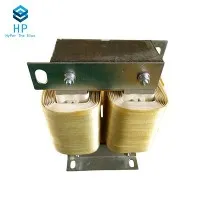



Hey there! As a PT & CT supplier, I often get asked about the domestic standards for Potential Transformers (PT) and Current Transformers (CT). So, I thought I'd take a few minutes to break it all down for you.
First off, let's talk about what PTs and CTs are. PTs are used to step down high voltage levels to a lower, more manageable level for metering and protection purposes. CTs, on the other hand, are used to step down high current levels. They're both crucial components in electrical power systems, ensuring that the measurements and protection devices can operate safely and accurately.
In many countries, including the United States, the standards for PTs and CTs are set by organizations like the Institute of Electrical and Electronics Engineers (IEEE) and the American National Standards Institute (ANSI). These standards cover a wide range of aspects, from the design and construction of the transformers to their performance and testing requirements.
One of the key standards for PTs is IEEE C57.13, which provides requirements for instrument transformers, including PTs. This standard specifies things like the accuracy classes of PTs, which determine how precise the voltage transformation is. For example, a PT with a higher accuracy class will provide a more accurate representation of the actual voltage in the system. It also covers things like insulation requirements, temperature rise limits, and impulse withstand capabilities.
For CTs, IEEE C57.13 also plays a major role. It defines the accuracy classes for CTs as well, which are important for ensuring that the current measurements are reliable. In addition, the standard addresses issues such as burden ratings, which refer to the amount of load that the CT can handle without significant errors. A CT with a higher burden rating can supply more power to the connected measuring or protection devices.
Another important aspect of the domestic standards is the testing procedures. PTs and CTs need to undergo a series of tests to ensure that they meet the specified requirements. These tests include ratio tests, which verify the accuracy of the voltage or current transformation, and insulation resistance tests, which check the integrity of the insulation. There are also impulse tests to simulate the effects of lightning strikes and other transient overvoltages.
Now, let's take a look at some of the products we offer as a PT & CT supplier. We have a wide range of Ring Current Transformers. You can check out our Ring Current Transformer on our website. These transformers are designed to provide accurate current measurements in a variety of applications. They're easy to install and offer high reliability.


We also have Single-phase Inductors. You can find more information about our Single-phase Inductor on our site. These inductors are used in electrical circuits to store energy in a magnetic field and can be an important part of power factor correction and filtering applications.
And if you're looking for a Zero Sequence Current Transformer, we've got you covered. You can learn more about our Zero Sequence Current Transformer. These transformers are used to detect unbalanced currents in a three-phase system, which can be an indication of a fault.
When it comes to choosing the right PT or CT for your application, it's important to consider the domestic standards. Make sure that the products you select meet the relevant accuracy classes and other requirements. This will ensure that your electrical system operates safely and efficiently.
If you're in the market for PTs or CTs, we'd love to talk to you. Whether you're working on a small-scale project or a large industrial installation, we have the expertise and the products to meet your needs. Our team of experts can help you select the right transformers based on your specific requirements and ensure that they're installed and commissioned correctly.
So, don't hesitate to reach out to us if you have any questions or if you're ready to start a procurement process. We're here to make your experience as smooth and hassle-free as possible.
In conclusion, understanding the domestic standards for PTs and CTs is essential for anyone involved in the electrical power industry. These standards ensure the quality and reliability of the transformers, which in turn contribute to the safe and efficient operation of electrical systems. As a PT & CT supplier, we're committed to providing products that meet or exceed these standards.
References:
- IEEE C57.13 - Standard Requirements, Terminology, and Test Code for Instrument Transformers